The Sartorial Straitjacket
The modern tuxedo is the undisputed pinnacle of formal elegance. It is the uniform of secret agents, red-carpet royalty, and high-society galas. When an invitation demands “Black Tie,” it demands strict adherence to tradition. But beneath this rigid veneer of sophistication lies a scandalous history. The tuxedo did not begin as a symbol of conformity. It was born as a highly confidential, rule-breaking rebellion against the suffocating grip of Victorian high society.
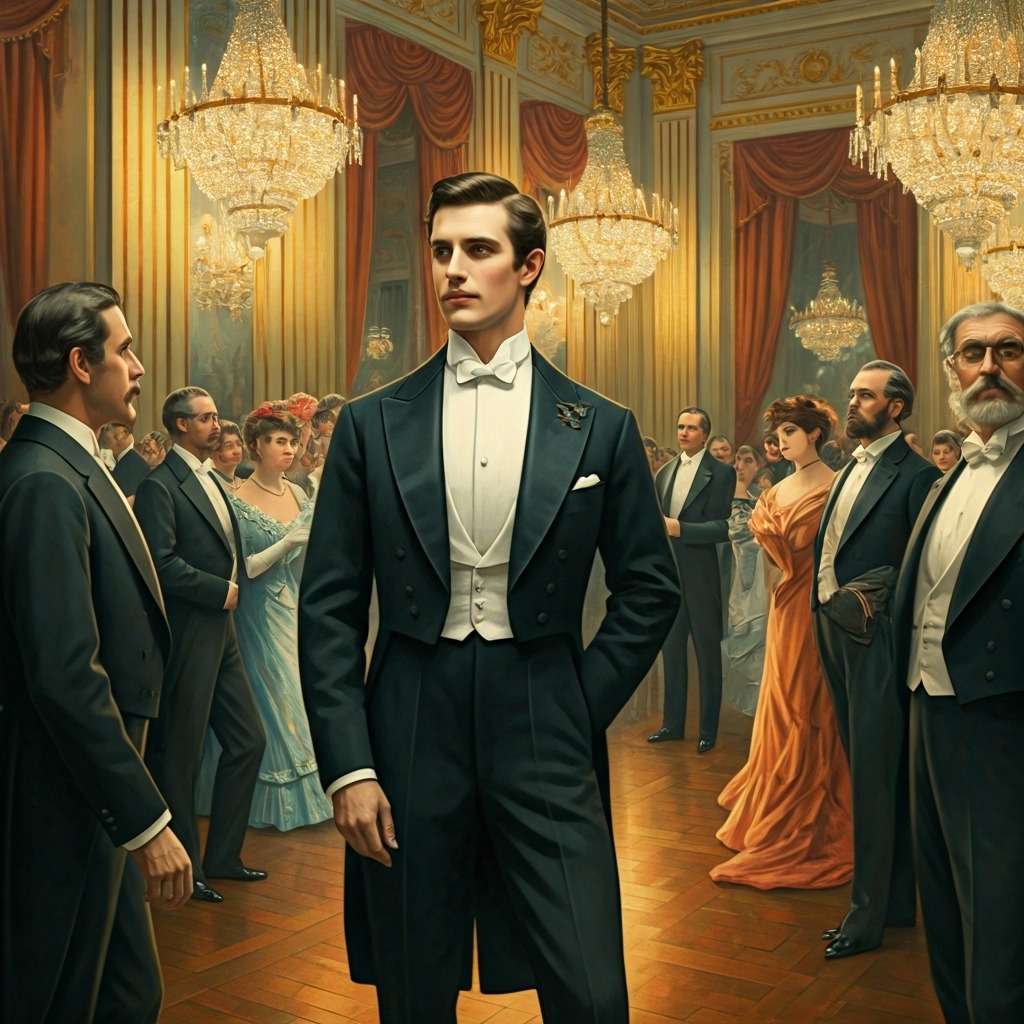
To understand the sheer audacity of this garment, one must first understand the physical toll of a 19th-century dinner party. Men were required to wear stiff, restrictive swallow-tail coats for formal evening meals. Imagine enduring a lavish, ten-course feast while strapped into a sartorial straitjacket. It was an era where comfort was sacrificed at the altar of etiquette. But behind the closed doors of the British monarchy, a quiet mutiny was brewing.
A Royal Secret in Blue Silk
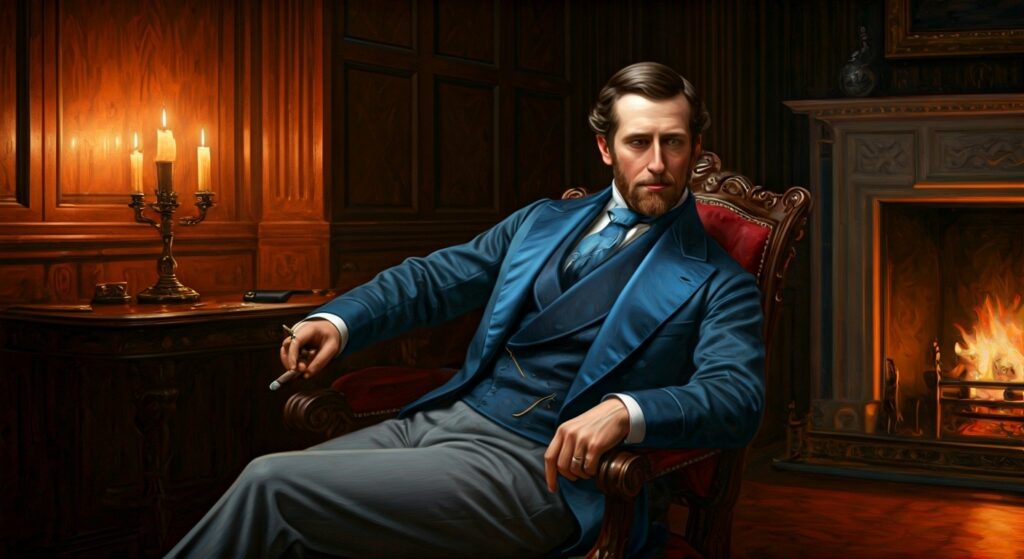
The inciting incident of modern menswear did not happen in America, as the tuxedo’s name might suggest. It unfolded in London in 1865. The Prince of Wales—the future King Edward VII—was utterly exhausted by the mandatory swallow-tail coats. Seeking refuge from the punishing wardrobe required even while lounging at his Sandringham country estate, he turned to his trusted tailor, Henry Poole & Co. of Savile Row.
The Prince commissioned a highly confidential garment: a short, tailless blue silk smoking jacket. This was a private rebellion, a 19th-century equivalent of luxury loungewear strictly reserved for relaxed, behind-closed-doors dinners. It was never meant to see the light of polite society. For over two decades, the tailless jacket remained a closely guarded royal secret.
The Panic of the American Aristocrat
The secret finally crossed the Atlantic in 1886, propelled by a healthy dose of American social anxiety. Wealthy American James Brown Potter and his glamorous wife Cora received a coveted invitation to Sandringham. Faced with the sheer, unadulterated panic of packing for a royal weekend, Potter was unsure of what to wear for a “relaxed” dinner with the future king. Desperate, he consulted the Prince directly.
Rather than subjecting his guest to the dreaded tailcoat, the Prince directed Potter to Henry Poole & Co. to be fitted for a tailless dining jacket of his own. Potter was mesmerized by the revolutionary, deeply comfortable garment. He brought the jacket back to the United States—specifically to Tuxedo Park, a hyper-exclusive residential country club in upstate New York founded by tobacco magnate Pierre Lorillard IV. When the elite members of the club saw Potter’s sleek new jacket, it quickly became the unofficial uniform for their informal, male-only club dinners. But a secret this subversive couldn’t stay hidden in the country club forever.
The Autumn Ball Outrage
The simmering trend boiled over into full-blown scandal in October 1886. Legend dictates that Pierre Lorillard’s son, Griswold Lorillard, shocked high society by wearing this tailless jacket to the club’s highly formal Autumn Ball.
To wear a tailless jacket to a formal ball was an absolute outrage—the Victorian equivalent of wearing sweatpants to a state dinner. Contemporary gossip columns hyperventilated over his scandalous attire. While modern fashion historians debate the exact details of that night—some argue Griswold actually wore a tight-fitting mess jacket and that the true adoption was more gradual—the damage was done. The legend took hold. Society outsiders, clutching their pearls at the rumors of this rebellious new garment, began referring to the style simply by the name of the club where it was spotted: the tuxedo.
The Ghost of a Rebellion
Initially, the tuxedo was a massive faux pas. Banished to private, male-only gatherings, wearing it in mixed company or to a highly formal setting was considered a grave insult to high society.
Yet, comfort is a powerful motivator. The undeniable ease and sleek silhouette of the tuxedo slowly began to win over the public. By the Edwardian era, men had collectively decided they were done suffering in swallow-tails, and the tuxedo largely replaced the tailcoat as the standard evening wear. Today, that elegant, rigid uniform is actually the ghost of a blue silk smoking jacket—a royal rebellion that accidentally changed fashion forever.