The Deadliest Commute in History
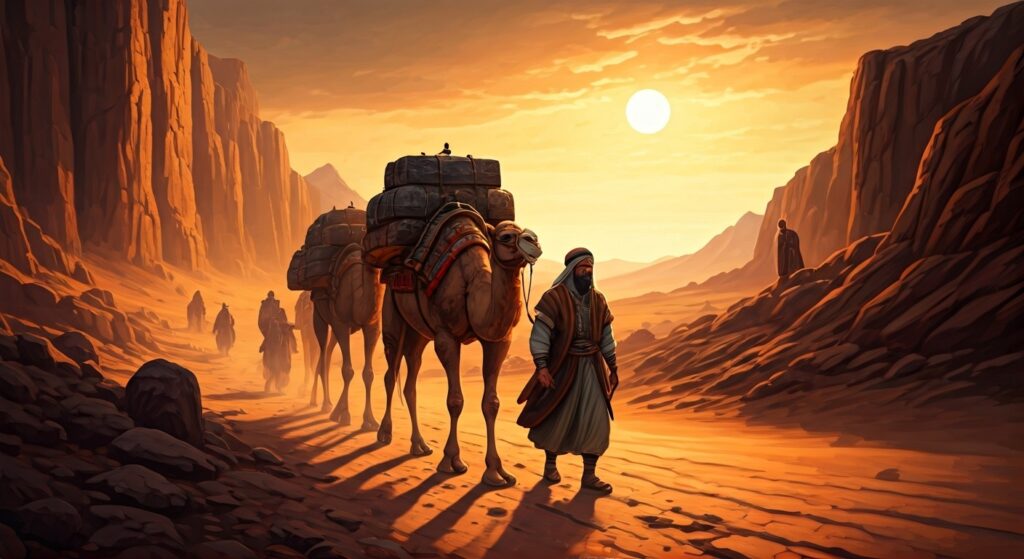
Picture the 9th century. You are a merchant traversing the sprawling, unforgiving expanse of the Silk Road. Your life’s work sits in a heavy, iron-bound wooden chest, packed to the brim with gold dinars and silver dirhams. But out here in the sun-baked wastes, wealth is a death sentence. Bandits watch the trade routes like hawks, waiting for the perfect moment to strike. A single ambush won’t just ruin your business—it will end your life.
During the Islamic Golden Age, the Abbasid Caliphate was an absolute powerhouse, stretching from the coasts of North Africa to the rugged steppes of Central Asia. The trade networks were brilliant, but the physical reality of moving wealth was a logistical nightmare. Carrying heavy chests of coinage across remote deserts meant making yourself a walking target.
You might think international banking was invented centuries later by men in powdered wigs in Europe to solve this very problem. You’d be wrong. The solution to this life-or-death dilemma came from the brilliant minds of the medieval Middle East.
The Paper Shield
To mitigate the deadly risk of the road, Muslim merchants and financial minds developed a highly sophisticated system of wealth management that feels shockingly modern.
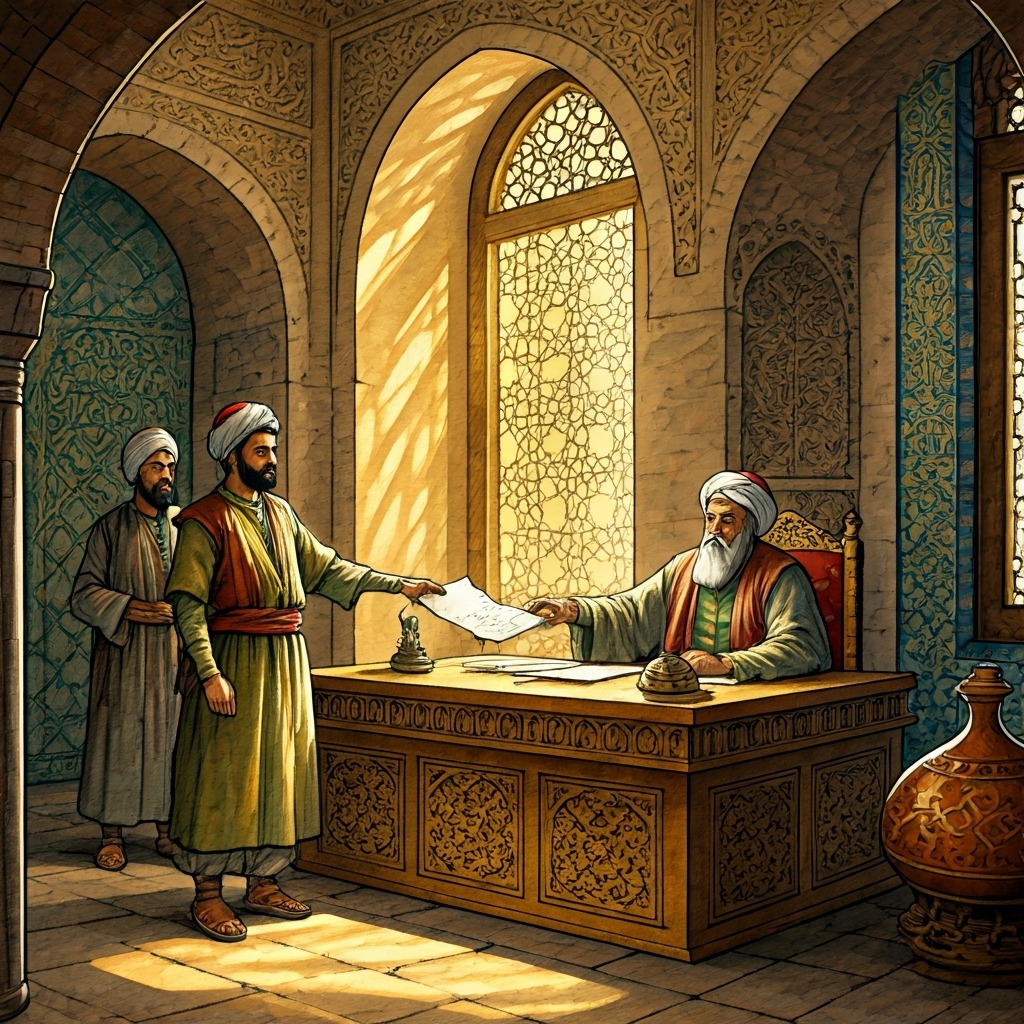
Instead of dragging a chest of gold from Baghdad to Damascus, a merchant could simply walk into the office of a trusted local moneychanger or banker—known as a sarraf or jahbadh. The merchant would deposit their physical coinage in a secure vault. In exchange, the banker didn’t offer armed guards or faster horses.
They offered a simple piece of paper.
This written document was called a saqq (plural: sukuk). It was a legally binding mandate instructing a corresponding banker in a distant city—whether Cairo, Cordoba, or Damascus—to pay the bearer a specific amount of money upon arrival.
Suddenly, the perilous journey across the desert was stripped of its greatest danger. If bandits held up a caravan and found nothing but spices, textiles, and a piece of paper with a signature on it, the merchant’s wealth remained perfectly safe in a vault hundreds of miles away.
An Empire Built on a Promise
Of course, a piece of paper is only as valuable as the promise behind it. How did a banker in Cairo know that a banker in Baghdad actually held the gold?
The entire system was anchored by an incredibly robust merchant network and an unbreakable code of trust. These early financial pioneers established the world’s first clearinghouses—centralized hubs where distant banking branches could regularly settle their accounts and balance their ledgers. It was an intricate, continent-spanning web of credit and debt, entirely predicated on the fact that these bankers kept their word.
Every time you pay rent, buy groceries, or transfer funds on your phone today, you are participating in a financial legacy established by Abbasid sarrafs over a thousand years ago.
The Word That Conquered the World
As Mediterranean trade flourished, the secret of the saqq couldn’t stay contained within the Abbasid empire. Italian merchants, Crusaders, and traders operating in Al-Andalus (Islamic Spain) began interacting with the Islamic world. They watched in awe as merchants traveled light, unburdened by gold, yet wielding immense purchasing power.
Naturally, they wanted in.
European traders adopted these financial instruments, and the terminology traveled right along with the concept. The Arabic word saqq was originally derived from the Persian word chak, meaning a document or contract. As it entered the European lexicon, it morphed. In Old French, it became eschequier, eventually settling into the modern English words we use today: cheque and check.
While other ancient civilizations toyed with early forms of credit—the Romans had their praescriptiones, India utilized the adesha, and the Chinese had their famous flying cash—the Abbasid saqq holds a uniquely significant place in history. It didn’t just provide the exact etymological root for the modern check; it laid out the foundational mechanics of international banking, credit transfer, and paper-based wealth management. It was the blueprint that European banking dynasties would later adopt, formalize, and claim as their own.
So, the next time you hand over a piece of paper—or tap a plastic card—to pay for something, take a moment to remember the terrified merchants of the Silk Road, and the ingenious Middle Eastern bankers who realized that the best way to protect gold was to leave it behind.