A Fortress Condemned
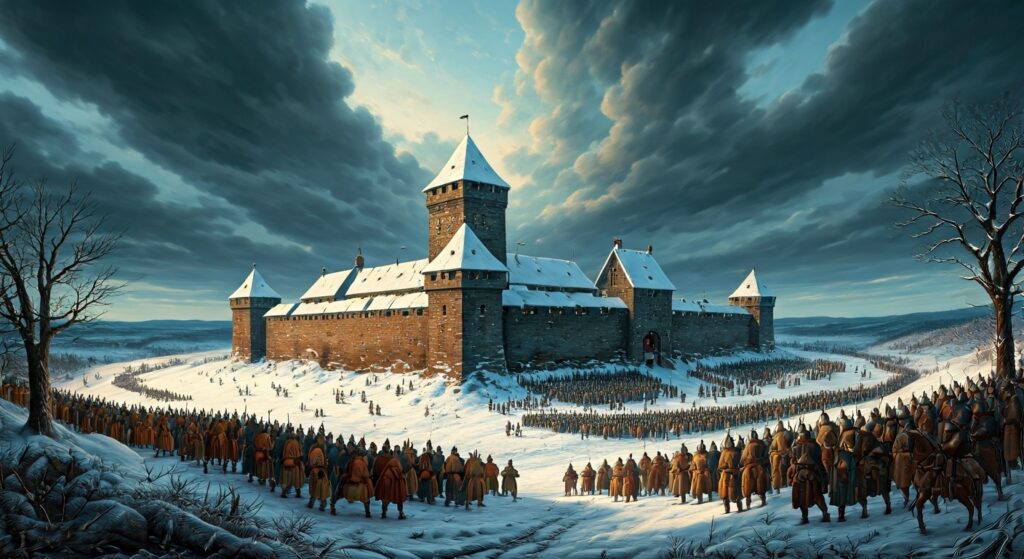
In the bitter, freezing December of 1140, the shadow of death fell over the heavily fortified castle of Weinsberg. The Holy Roman Empire was tearing itself apart in a vicious, generational blood feud between two rival dynasties: the ruling Hohenstaufens and the rebellious Welfs. King Conrad III, the first German monarch of the Hohenstaufen line, had marched his massive army to the modern-day Baden-Württemberg region with a single, ruthless goal: to wipe his rival, Welf VI, off the map.
The siege that followed was relentless. Barricaded inside Weinsberg, the Welf defenders were starved, frozen, and rapidly running out of hope. Across the blood-soaked battlefield, the warring factions screamed the battle cries “Hie Welf!” and “Hie Waiblingen!”—chants that would echo through the centuries, eventually evolving into the legendary, devastating feud between the Guelph and Ghibelline factions of Italy. But for the men trapped inside Weinsberg, history didn’t matter. Survival did. And time had just run out.
The King’s Ruthless Ultimatum
When the castle was finally forced to surrender, King Conrad III was in no mood for mercy. He didn’t just want a military victory; he wanted to send a terrifying message to anyone who dared defy his crown. His decree was absolute: the fortress of Weinsberg was to be burned to the ground, and every single male defender inside was to be put to the sword. There would be no ransoms accepted. No prisoners taken.
Yet, the rigid, often contradictory code of medieval chivalry presented the King with a dilemma. While Conrad was perfectly willing to order a mass execution of his enemies, slaughtering innocent noblewomen was a stain his reputation could not afford. To solve this, he offered the women of the doomed castle a final, seemingly generous ultimatum. They were granted safe passage out of Weinsberg before the slaughter began. Furthermore, the King decreed they could leave with whatever personal belongings they could physically carry on their shoulders.
Conrad and his generals sat back, fully expecting the heavy wooden gates to open and the women to emerge weeping, weighed down by sacks of gold, family heirlooms, and winter cloaks.
The Weight of Devotion
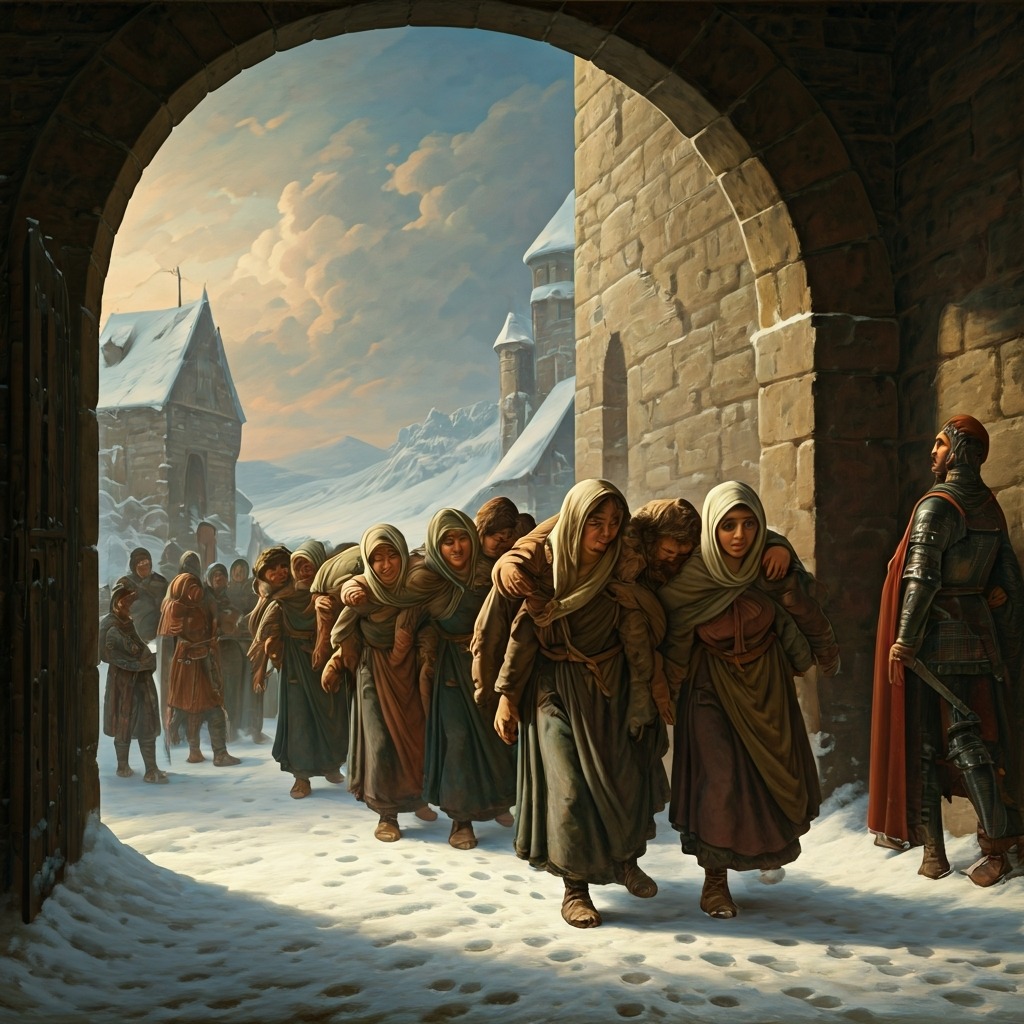
When the gates of Weinsberg finally creaked open into the freezing winter air, the King’s army fell into a stunned, breathless silence.
The women were not carrying silver. They were not clutching tapestries, jewels, or chests of gold. Instead, they marched out into the snow carrying their husbands, their brothers, and their sons on their backs.
Faced with the absolute certainty of their loved ones’ deaths, the women of Weinsberg had scrutinized the King’s decree and found the ultimate legal loophole. They decided that the most valuable “belongings” they could carry on their shoulders were the very men Conrad had just condemned to the gallows. Staggering under the immense weight of their armored men, the women began a slow, agonizing procession toward freedom.
A King’s Word
The sheer audacity of the maneuver sent shockwaves through the Hohenstaufen camp. Duke Frederick II of Swabia—the King’s notoriously hot-headed brother—flew into a blind rage. He demanded the men be stripped from their wives’ backs and executed on the spot, arguing that this blatant trickery violated the spirit of the surrender. He wanted blood.
But King Conrad III simply watched the struggling women. Whether he was genuinely moved by their breathtaking display of loyalty, or simply impressed that he had been so brilliantly outmaneuvered by a technicality, Conrad raised a hand and halted his brother.
He refused to let his soldiers draw their weapons, famously declaring that a king’s word should never be twisted or reinterpreted. He had made a promise, and he was bound by honor to keep it. The men of Weinsberg were allowed to walk free.
This stunning act of devotion became one of the most celebrated events of medieval history, meticulously recorded in the late 12th-century Chronica Regia Coloniensis (the Royal Chronicle of Cologne). Centuries later, the ruins of that very fortress were officially renamed Burg Weibertreu—”Wives’ Loyalty Castle”—standing as a permanent monument to the day a tyrant’s wrath was defeated by the sheer, unyielding strength of the women who outsmarted him.