To look out at the terrifying, freezing, endless expanse of the Arctic Ocean and think, “Let’s conquer it,” requires a special brand of hubris. In 1845, the men of the British Royal Navy’s Franklin Expedition believed their cutting-edge technology made them invincible to the harshest environment on earth.
They were dead wrong.
A Floating Fortress of Hubris
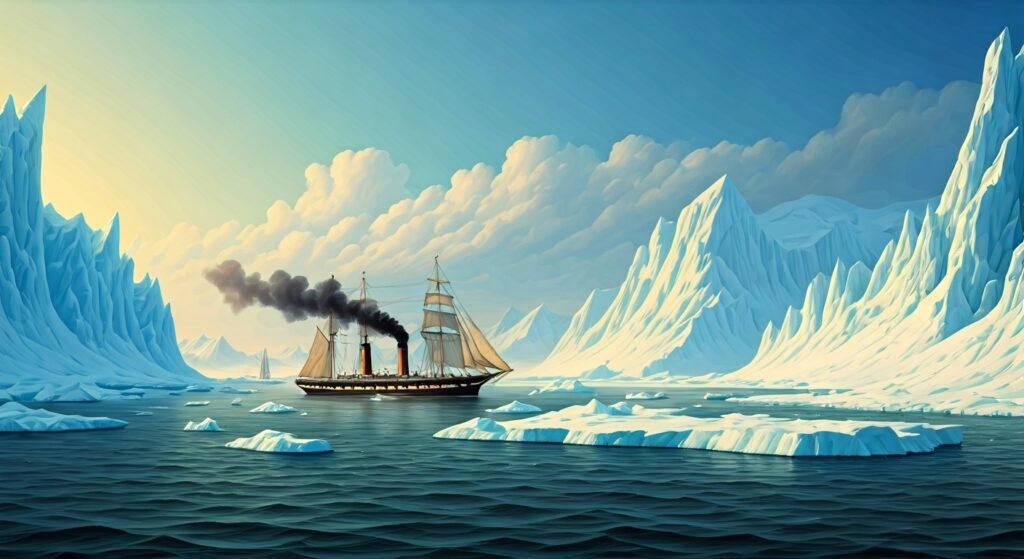
In the spring of 1845, the British Royal Navy prepared to conquer the final unnavigated sections of the Northwest Passage. Commanded by Sir John Franklin, the expedition was outfitted with two technologically advanced marvels of the era: HMS Erebus and HMS Terror.
These weren’t your average wooden sailing ships. They were reinforced leviathans equipped with internal steam heating, steam engines driving screw propellers, and enough provisions to last 129 men for three solid years. It was the Victorian equivalent of a space mission. They were prepared for anything.
Or so they thought.
In July 1845, the ships were last spotted by European whalers in Baffin Bay. The crew was in high spirits, waving to the whaling vessels before turning their prows toward the labyrinth of the Canadian Arctic. It was the last time the civilized world would ever see them alive.
Swallowed by the White Void
The first winter brought ominous signs. The crew hunkered down at Beechey Island, where the brutal conditions claimed the lives of three men, who were buried in the permafrost. But the true nightmare began the following summer.
Sailing south in 1846, the Erebus and Terror sailed directly into a trap. They became permanently wedged in impenetrable pack ice in the Victoria Strait, just off the coast of King William Island.
For over a year and a half, the ice refused to thaw. The ships, despite their steam engines and reinforced hulls, were imprisoned in a silent, freezing white void. A grim note left in a stone cairn at Victory Point revealed a devastating blow: Sir John Franklin died in June 1847.
By April 1848, the situation had deteriorated from dire to catastrophic. The surviving 105 men, now under the command of Captain Francis Crozier and Commander James Fitzjames, made a desperate decision. They abandoned their ice-crushed ships and began a doomed death march south across King William Island, dragging heavy sledges in hopes of reaching a Hudson’s Bay Company outpost on the Canadian mainland.
The Invisible Killer
As the men marched, they began dropping dead at an alarming rate. But it wasn’t just the freezing temperatures killing them. The crew was being destroyed from the inside out by a cascading biological failure.
Scurvy, tuberculosis, and starvation were rampant, but modern science points to a far more insidious culprit lurking in their high-tech supplies. To provision the ships cheaply and quickly, the Navy had contracted a man named Stephan Goldner to supply tinned food. The tins were sealed with thick, sloppy lead soldering that heavily contaminated the food inside. Worse, the ships’ unique steam-based water distillation systems utilized lead pipes.
Late 20th-century bone and hair analyses revealed exceptionally high lead levels in the crew’s remains. While modern historians debate whether lead was the primary cause of death over sheer starvation, the volume of heavy metals in their blood would have induced severe lethargy, crippling paranoia, and eventual madness. As the survivors dragged their lifeboats across the ice, their minds were literally unraveling, destroying their ability to make rational survival decisions.
A Descent into the Unthinkable
The final days of the Franklin Expedition are shrouded in macabre horror.
In 1854, Scottish explorer John Rae interviewed local Inuit hunters who reported a chilling sight: starving white men dragging sledges south. Later, the Inuit discovered camps littered with human remains. The bones had been cracked open, the marrow extracted.
When Rae returned to Britain and reported that the esteemed men of the Royal Navy had resorted to cannibalism, Victorian society erupted in outrage. Prominent figures, including Charles Dickens, vehemently refused to believe British sailors were capable of such savagery, choosing instead to vilify the Inuit and dismiss their accounts.
But the ice doesn’t lie. Archaeological expeditions in the 1980s and 1990s discovered human bones scattered across King William Island. When examined, the bones bore distinct, undeniable cut marks from steel blades. The starving, lead-poisoned, desperate men had indeed consumed their own dead.
The Ice Relinquishes Its Secrets
For over 160 years, the exact resting places of the Erebus and Terror remained one of the greatest maritime mysteries in history. The British had viewed the expedition as a romantic, heroic martyrdom, largely ignoring the gruesome realities and the highly accurate oral histories preserved by the Inuit.
The Inuit had always known what happened. Their ancestors had passed down specific stories of where the men walked, where one ship was crushed by ice, and where the other sank further south.
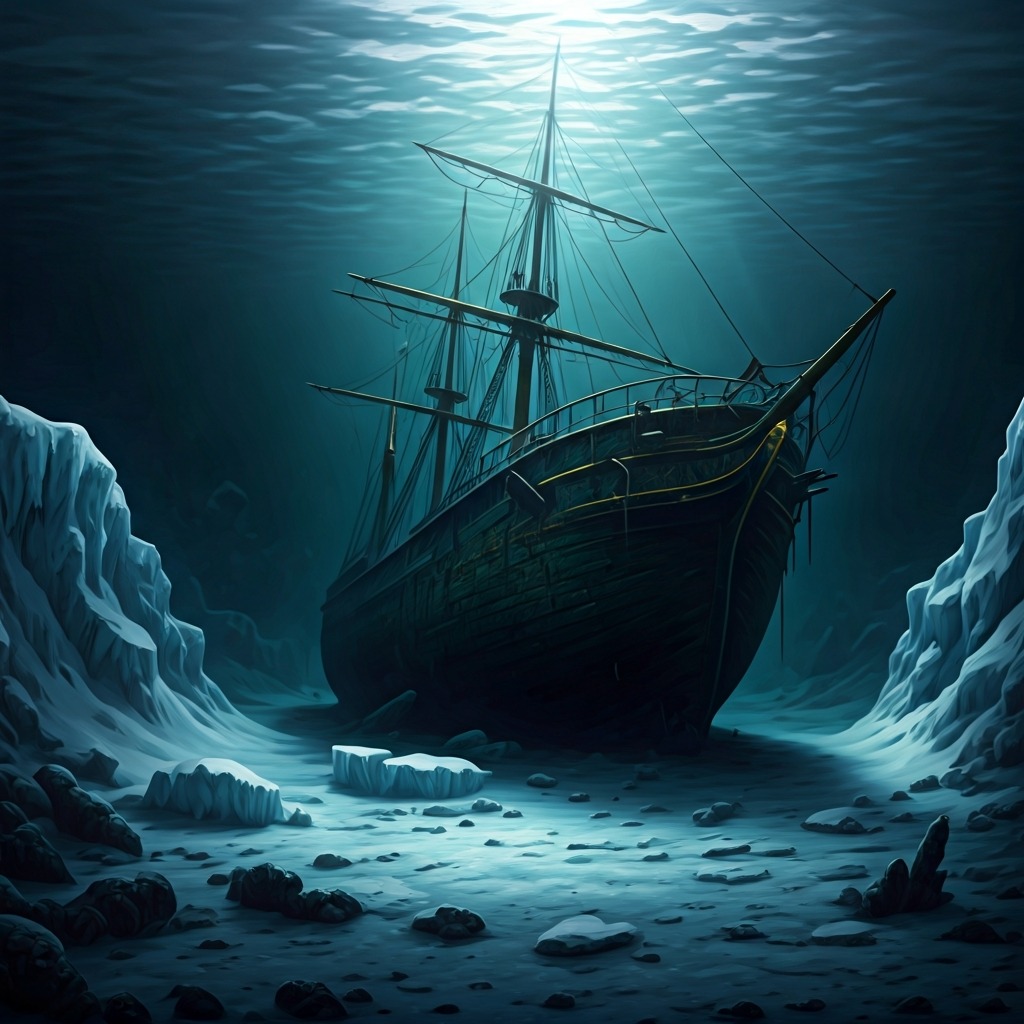
It wasn’t until modern searchers finally decided to listen to those indigenous accounts that the mystery was solved. Relying heavily on Inuit oral traditions, searchers located HMS Erebus in 2014 and HMS Terror in 2016, sitting in pristine, haunting condition beneath the Arctic ice.
Today, the Franklin Expedition stands as a chilling monument to human ambition. It is a profound reminder that no matter how advanced our technology, the brutal, uncaring realities of nature always have the final say.