The year is 1145, and Europe is bleeding. The Crusader states in the Middle East are faltering, slowly being suffocated by the tightening grip of powerful Islamic empires. European monarchs are desperate, staring down the barrel of a holy war they are losing. They need a miracle.
Instead, they got a ghost.
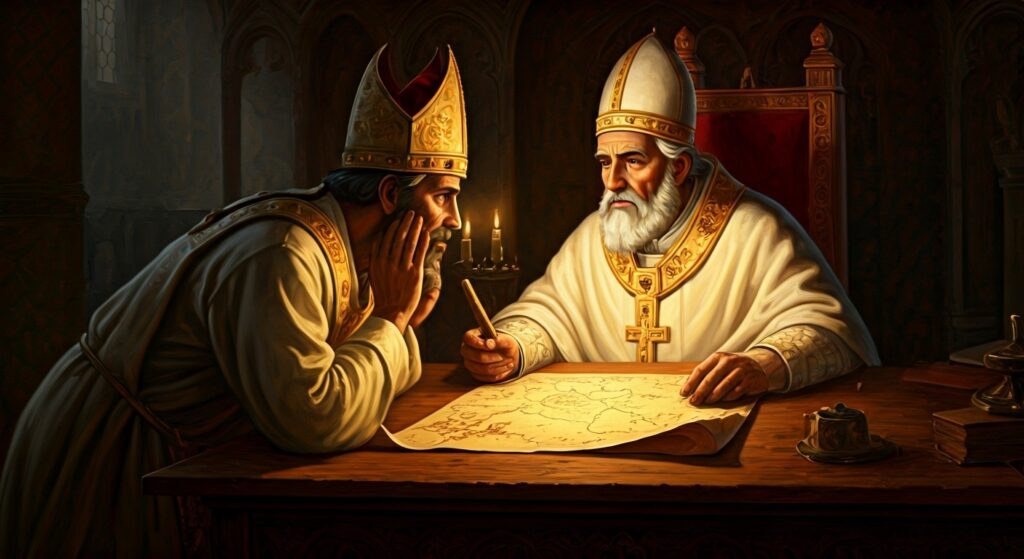
Enter Bishop Hugh of Jabala. Arriving at the court of Pope Eugene III, the bishop delivered a rumor so intoxicating it would consume the minds of kings, popes, and explorers for the next four centuries. He spoke of a mysterious warlord known only as “Presbyter Johannes”—Prester John.
According to the whispers echoing out of the East, this fabulously wealthy Christian king, a direct descendant of the Magi, had just annihilated Muslim forces in Persia. Even better, he was reportedly massing a colossal army, preparing to march on Jerusalem and save the Crusader states from total ruin. It was the ultimate geopolitical fantasy: a secret, invincible ally waiting in the wings.
There was just one problem. Nobody knew exactly where to find him.
The Manuscript That Broke the Middle Ages
For twenty years, the legend of Prester John simmered in the shadows of European courts. Then, in 1165, the medieval equivalent of a viral sensation ignited the continent.
A mysterious letter began circulating among the heavyweights of the era, addressed directly to Byzantine Emperor Manuel I Komnenos and Holy Roman Emperor Frederick Barbarossa. The author? Prester John himself.
The letter described a utopian empire spanning the “Three Indies” that defied human imagination. It boasted of rivers flowing with solid gold, the legendary Fountain of Youth, a sea made entirely of shifting sand, and a magic mirror that allowed the king to spy on every inch of his crime-free, poverty-free domain. It even claimed his kingdom was home to giant ants that dug for buried treasure.
It was a masterful, audacious forgery. Yet, desperate for hope and blinded by greed, Europe swallowed the bait whole. The letter was translated into dozens of languages and copied hundreds of times. The phantom king was no longer just a rumor; he was an obsession.
The Vanishing Envoy and the Mongol Mirage
Pope Alexander III was not about to let an alliance with a god-king slip through his fingers. In 1177, he dispatched his personal physician, Philip, with a letter addressed directly to Prester John. Philip rode off into the treacherous, unmapped East, carrying the salvation of the Papacy on his shoulders.
He was never heard from again.
Decades passed, and the silence only deepened the mystery. Then, in the 13th century, terrified Europeans heard reports of a massive, unstoppable army sweeping out of the East, crushing Islamic empires into dust. Was it Prester John, finally coming to make good on his promise?
Hardly. It was Genghis Khan and the Mongol Empire.
When European emissaries like Marco Polo and William of Rubruck finally survived the grueling trek deep into Asia, they scoured the steppes for rivers of gold and magic mirrors. They found nothing. Desperate to keep the myth alive, they downgraded the legend, claiming Prester John was actually just a minor, defeated regional chieftain, likely conflated with the Kerait leader Toghrul.
Shifting the Map: The African Utopia
By the 14th century, Europe faced a geographical crisis. Asia had been thoroughly scouted, and the utopian king was a no-show. But rather than admit they had been duped by a 200-year-old forgery, European cartographers simply moved the goalposts.
If he’s not in Asia, they reasoned, he must be in Africa.
Their desperate eyes turned to the Ethiopian Empire. It was a brilliant, convenient pivot. Ethiopia possessed a genuine, deeply ancient Christian tradition—the Ethiopian Orthodox Tewahedo Church—and it was entirely isolated from Europe by surrounding Islamic states. It was the perfect blank canvas upon which Europe could project its wildest fantasies.
The Ghost Who Launched a Thousand Ships
This is where the story shifts from a quirky medieval myth to world-altering history. The frantic quest to find Prester John became the ultimate catalyst for the Portuguese Age of Discovery.
Visionaries like Prince Henry the Navigator and King John II of Portugal began pouring unfathomable fortunes into massive maritime expeditions down the dangerous, uncharted coast of Africa. They had two distinct goals: find a lucrative sea route to the spice markets of India, and finally shake hands with Prester John to forge an unstoppable anti-Ottoman alliance.
Finally, in 1490, the moment of truth arrived.
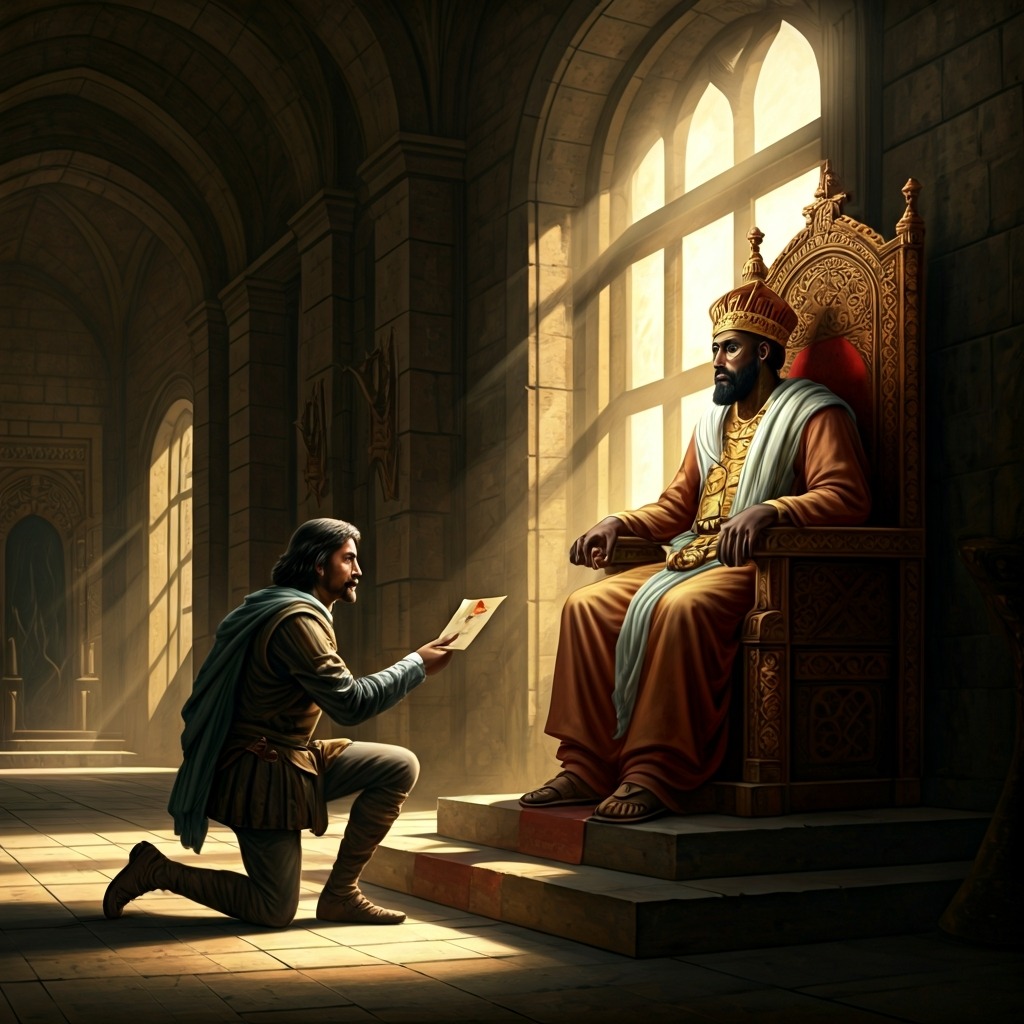
Portuguese explorer Pêro da Covilhã survived a harrowing journey to reach the Ethiopian court. Exhausted but triumphant, he presented a letter to Emperor Eskender, formally addressing the flesh-and-blood monarch as “Prester John.”
Imagine the sheer bewilderment in that throne room. Eskender, a real king dealing with actual geopolitical crises, stared at an exhausted European traveler handing him a letter addressed to a magical monarch with treasure-hunting ants and a magic mirror. The Ethiopian emperors were utterly baffled by the title and the bizarre, supernatural expectations placed upon them.
Though the connection stubbornly stuck in European minds for another century, the truth eventually set in. As global geography was demystified and the blank spaces on the map were filled, the phantom king slowly faded into the realm of fiction.
Yet, Prester John pulled off the ultimate magic trick. He never existed, but the desperate hunt to find him inadvertently mapped the world, bridged continents, and launched the global age of exploration.