The Night Tomorrow Disappeared
You close your eyes on a crisp Thursday night, the embers of the hearth fading to a dull orange. When you wake up, it’s Friday morning—but the date has jumped forward by nearly two weeks. You haven’t been drugged. You haven’t been abducted. The powers that be simply decided that the intervening ten days no longer exist.
While we collectively groan over the minor inconvenience of losing an hour to daylight saving time, history harbors a far more staggering temporal heist. In the autumn of 1582, millions of people went to sleep on Thursday, October 4, and woke up on Friday, October 15. Ten days were wiped from the timeline, completely ghosted by history. The resulting fallout was a mess of epic, world-shattering proportions.
A Cosmic Miscalculation
To understand why the government would simply delete a chunk of October, we have to look at a centuries-old scheduling crisis. For over a millennium, the Western world had been running on the Julian calendar, implemented by Julius Caesar in 45 BCE. Caesar’s math was revolutionary, but it harbored a fatal flaw: it miscalculated the solar year by about eleven minutes.
Eleven minutes doesn’t sound like a catastrophe. But let that error ride for sixteen centuries, and the cosmos begins to warp. By the late 1500s, this tiny annual glitch had snowballed into a massive ten-day discrepancy. The spring equinox was drifting dangerously deep into March, severely compromising the Catholic Church’s ability to accurately calculate the holiest day of the year: Easter.
Enter Pope Gregory XIII. Armed with the calculations of brilliant astronomers, the Pope issued a papal bull in February 1582. The solution was mathematically elegant but culturally terrifying. To realign the heavens and the earth, ten days had to be purged from existence.
The Ultimate Rent Dispute
Time, for the average 16th-century European, wasn’t just a number on a page—it was a divine rhythm tied to the seasons and the will of God. When the calendar skipped, chaos reigned.
Landlords and merchants, sensing an opportunity for a quick ducat, ruthlessly demanded a full month’s rent and interest for October. Naturally, laborers and guilds rioted, arguing they should only pay for the twenty-one days the month actually contained. Debtors panicked as their loans suddenly matured ten days early. Courts across Italy, Spain, and Portugal were flooded with disputes over contracts, wages, and leases that had been completely upended by the temporal leap.
But the panic wasn’t just financial; it was existential. A wave of genuine terror swept through the peasant class, many of whom believed the Pope had artificially shortened their lives, literally robbing them of ten days of their God-given time on Earth.
Time Travel at the Border
Because this was 16th-century Europe—a powder keg of religious tension—the calendar shift triggered a bizarre geopolitical nightmare.
The year 1582 was the height of the Protestant Reformation. To Protestant nations, the Pope wasn’t a spiritual authority; he was the enemy. Leaders in Germany, England, and Scandinavia denounced the Gregorian calendar as a sinister Catholic plot. They were terrified this was a trick to force them into observing holy days on the “wrong” dates, thereby invalidating their prayers and damning their souls.
Because Protestant and Orthodox countries stubbornly refused to adopt the calendar for centuries, Europe fractured into different time zones of reality. A traveler crossing a border could instantly time-travel ten days into the future or the past, wreaking havoc on international trade and diplomacy.
The Saint Who Died for a Week
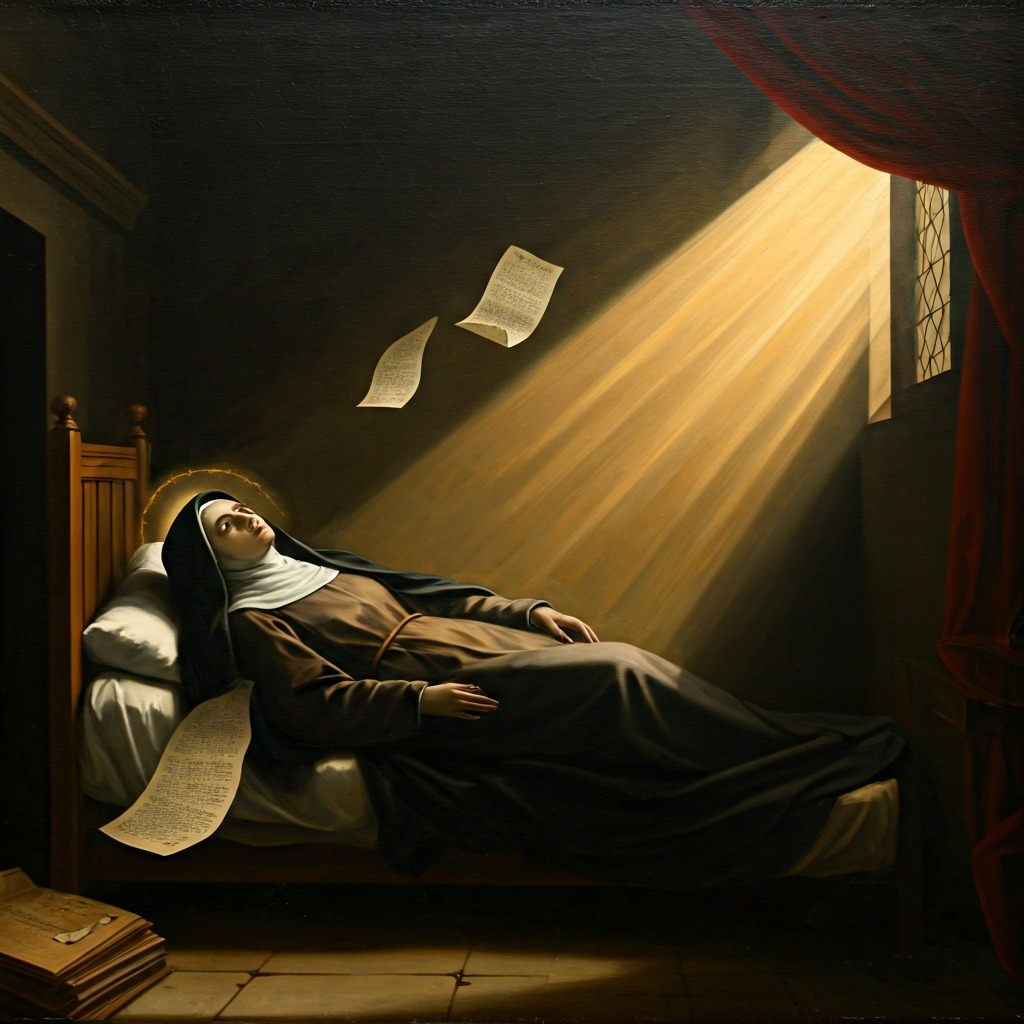
Perhaps the most poetic quirk of this entire saga involves Saint Teresa of Avila. The beloved mystic passed away late on October 4, 1582—the exact night the timeline shifted.
Because the sun rose the next morning on October 15, her death technically spanned an entire week in a single night. When the Church later assigned her feast day, they placed it on the 15th, forever immortalizing her in this bizarre temporal anomaly.
The reality of 1582 was a profound cultural shock that proved just how fragile our grip on time really is. So, the next time your phone updates overnight and you lose a single hour of sleep, remember the autumn the world lost a week and a half—and the absolute pandemonium that followed.