To steal a 1,750-ton nuclear submarine is an act of madness. To steal it in secret, right under the noses of the Soviet Navy, from the crushing black depths of the Pacific Ocean, is something else entirely.
In the summer of 1974, the CIA attempted exactly that. It was the site of the most audacious, expensive, and mind-bogglingly complex espionage operation in American history: Project Azorian.
🌊 A Ghost in the Abyss
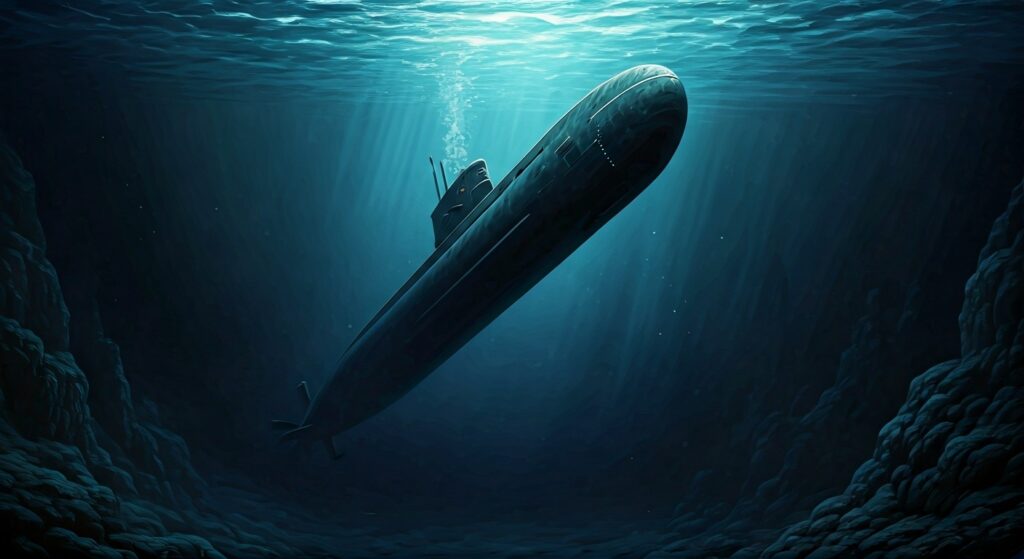
Our story begins in early 1968, right at the paranoid, icy peak of the Cold War. The Soviet Golf II-class ballistic missile submarine, the K-129, was on a routine patrol when it suddenly vanished approximately 1,500 miles northwest of Hawaii. It took its crew of 98 men, three nuclear-armed ballistic missiles, and—most importantly to the United States—highly classified Soviet cryptographic equipment straight to the ocean floor.
The Soviet Navy panicked. They launched a massive search armada, sweeping the Pacific for any trace of their missing nuke-laden sub. But the ocean is vast, dark, and unforgiving. After two months of finding absolutely nothing, they gave up.
The Soviets didn’t know it, but the U.S. Navy was listening.
Using their highly classified SOSUS (Sound Surveillance System) underwater acoustic network, the Americans had detected the faint, unmistakable acoustic signature of an explosion. They knew exactly where the K-129 had gone down. The U.S. dispatched the USS Halibut, a specialized search submarine, which successfully photographed the wrecked Soviet sub resting at a terrifying depth of 16,000 feet—nearly three miles down.
💰 The Billionaire’s Perfect Lie
Recognizing the absolute goldmine of intelligence sitting in the dark, the CIA was tasked with an impossible mission: go get it.
Lifting a shattered, 1,750-ton submarine from a depth of three miles had never been attempted in human history. To even try, the CIA needed to build a massive, highly specialized ship. But how do you build a giant, bizarre-looking recovery vessel and park it in the middle of the Pacific Ocean without the Soviets getting suspicious?
You need a flawless cover story. And you need a frontman eccentric enough that people will believe whatever crazy scheme he announces.
Enter billionaire Howard Hughes.
The CIA approached Hughes, and he agreed to play along. He publicly announced that his company, Global Marine, was building a state-of-the-art vessel to mine the ocean floor for manganese nodules. It was the perfect 1970s distraction. The press ate it up. The Soviets bought it. It was a perfectly orchestrated illusion, and nobody suspected a thing.
🦀 The Mechanical Kraken
The ship they built was an absolute engineering marvel called the Hughes Glomar Explorer (HGE). Built by Sun Shipbuilding and Drydock Co., it looked like an offshore oil rig crossed with a Bond villain’s lair.
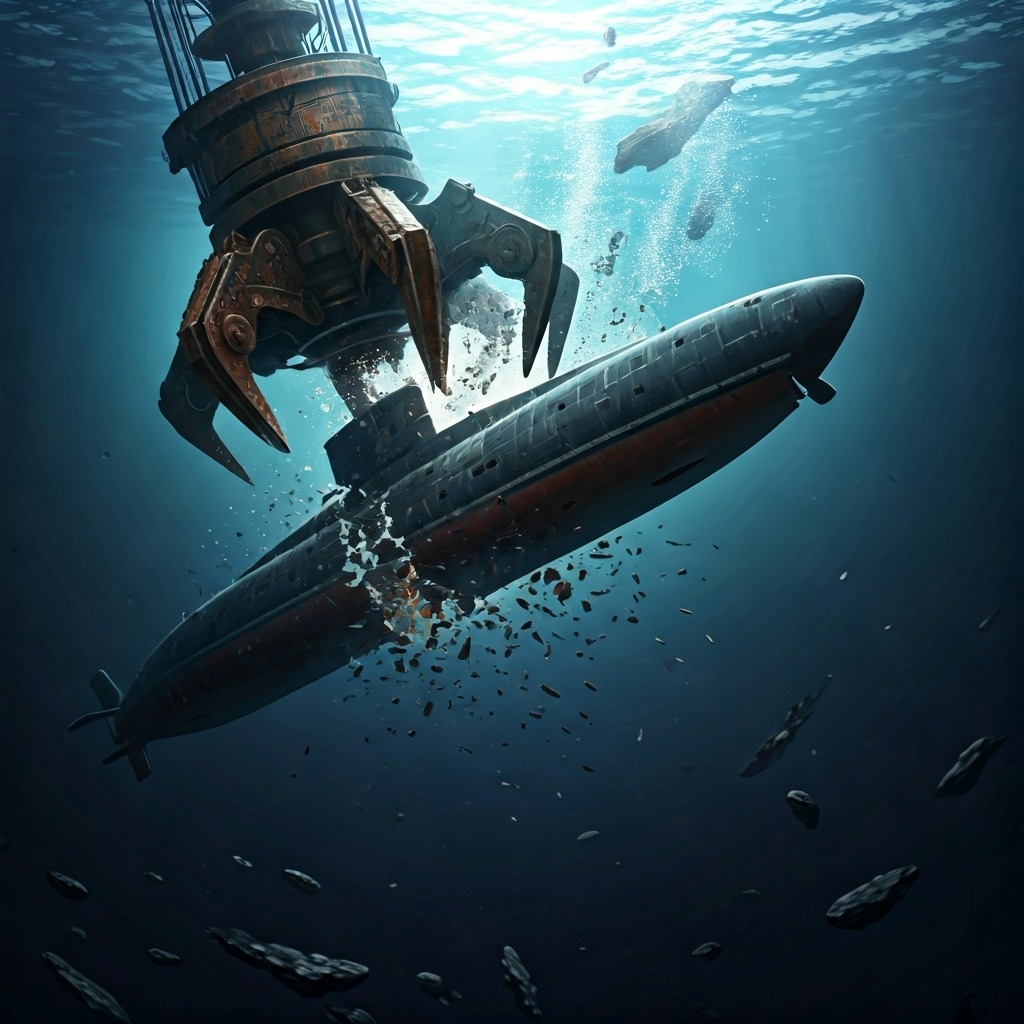
Its secret weapon was a massive internal “moon pool”—a giant set of doors on the bottom of the hull that allowed the crew to lower and raise equipment in total secrecy, hidden from the prying eyes of Soviet satellites. The recovery mechanism was a terrifyingly large mechanical claw, internally dubbed “Clementine.” Using a heavy-lift pipe system, they planned to lower Clementine three miles down, grab the sub, and winch it up into the belly of the ship.
⛓️ The Heist of the Century
In the summer of 1974, the Glomar Explorer arrived at the drop zone. The tension was suffocating. Soviet intelligence ships were actually in the area, actively monitoring the Glomar Explorer. But Hughes’s cover story held strong; the Soviets watched this weird “mining” ship for a while, got bored, and eventually sailed away.
With the coast clear, the crew lowered Clementine 16,000 feet into the abyss. Incredibly, the giant steel fingers successfully grasped the K-129. They began the agonizingly slow ascent.
For a moment, it looked like the CIA had pulled off the greatest heist in history. But then, disaster struck.
As the submarine was being hauled up, the immense stress proved too much. A crack formed in one of the heavy steel tines of the claw. With a violent shudder that vibrated all the way up the pipe string, the claw failed. The K-129 broke apart. Approximately two-thirds of the submarine—including the highly coveted code room and the nuclear missiles—slipped from Clementine’s grasp and plummeted back to the ocean floor.
🤐 Secrets, Spies, and the Glomar Response
The CIA did manage to pull the forward section of the sub into the moon pool. While they missed out on the cryptographic holy grail, they didn’t come up entirely empty-handed. They recovered two nuclear-armed torpedoes, various Soviet manuals, and the remains of six Russian submariners.
In a surprising moment of Cold War humanity, the CIA gave the fallen Soviet sailors a formal military burial at sea, complete with the playing of the Soviet national anthem. They filmed the somber ceremony and, decades later in the 1990s, handed the tape over to Russia.
The CIA immediately started planning a second recovery mission, dubbed Project Matador, to go back for the rest of the sub. But fate—and a group of petty thieves—had other plans.
In 1974, burglars broke into a Howard Hughes office in Los Angeles and stole confidential documents that explicitly linked Hughes to the CIA. The whispers started, and eventually, legendary investigative journalist Seymour Hersh published an exposé in 1975, blowing the lid off the entire operation.
When furious reporters cornered the government demanding answers, the CIA needed a legally bulletproof way to dodge the questions without officially lying. They crafted a brilliant, maddeningly vague sentence: “We can neither confirm nor deny the existence of the information requested.”
Today, this phrase is famously known in legal and intelligence circles as the Glomar response—named directly after the ship that tried to steal a submarine.
At an estimated cost of $800 million (several billion in today’s money), historians still fiercely debate whether Project Azorian was a massive financial boondoggle or a triumph of deep-ocean engineering that provided vital insights into Soviet tech. Regardless of the intelligence yield, the sheer audacity to build a giant mechanical claw, disguise it as a billionaire’s pet project, and snatch a nuclear sub from the bottom of the ocean remains one of the most riveting chapters of the Cold War.