The 20th century is littered with geopolitical close calls, but none are as terrifyingly intimate as the events of October 27, 1962. It is a story not of presidents or premiers, but of a single man trapped in a sweltering metal tube at the bottom of the ocean, holding the fate of the entire human race in his hands.
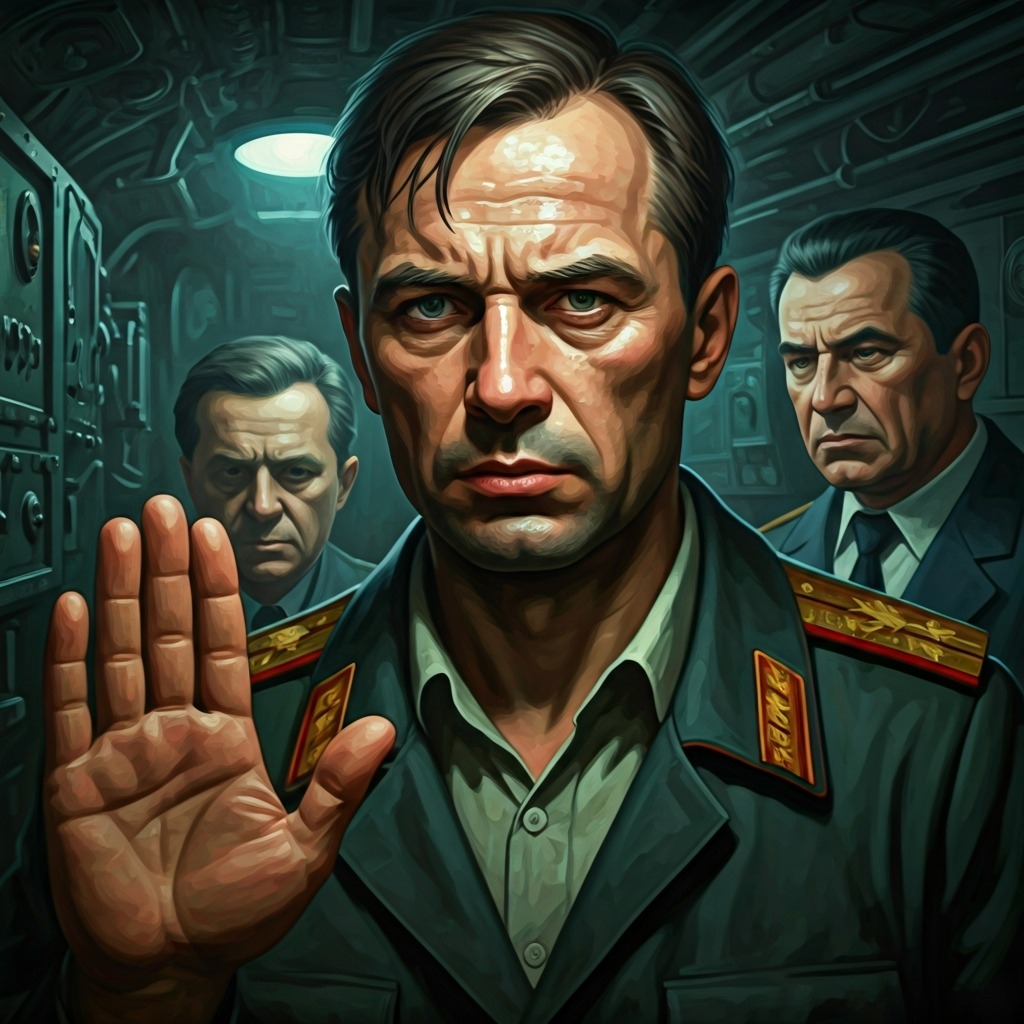
If humanity’s survival is a mixture of sheer luck and unimaginable grace, then on that fateful day, our savior was a 36-year-old Soviet Navy officer named Vasili Arkhipov.
The Deadliest Day in Human History
Historians grimly refer to October 27, 1962, as ‘Black Saturday’—the absolute boiling point of the Cuban Missile Crisis. The United States and the Soviet Union were locked in a nuclear standoff, and the world was collectively holding its breath, waiting for the flash that would end it all.
In the midst of this geopolitical chessboard, the Soviet Navy dispatched four Project 641 (Foxtrot-class) diesel-electric submarines to the Caribbean. Arkhipov was aboard the submarine B-59. On paper, he was the second-in-command of the vessel, but he also carried the immense weight of being the chief of staff for the entire submarine flotilla.
Unbeknownst to the American warships patrolling the waters above, each of these Soviet submarines was hiding a catastrophic secret: they were armed with a 10-kiloton nuclear torpedo, packing roughly two-thirds the destructive yield of the bomb dropped on Hiroshima.
A Sweating Steel Coffin
The conditions inside the B-59 were rapidly devolving into an absolute nightmare.
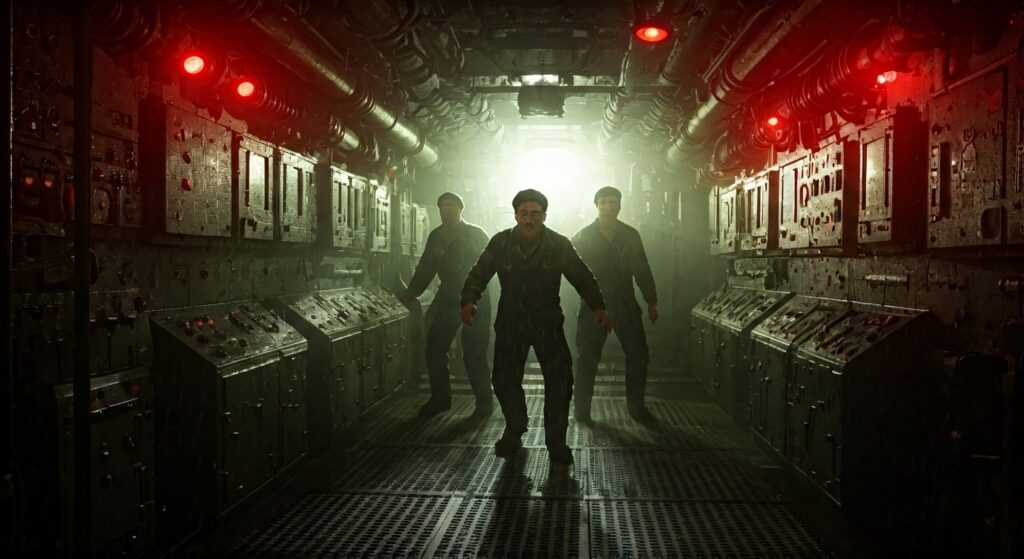
Actively evading the US fleet, the submarine was forced to run submerged for days. Their batteries were nearly depleted, and to make matters worse, the submarine’s air conditioning system had completely failed. Temperatures in parts of the ship soared above 110 degrees Fahrenheit (45 degrees Celsius). The air was thick, stale, and highly toxic. Carbon dioxide levels spiked so high that crew members were fainting at their stations from heat exhaustion and oxygen deprivation.
They were blind, deaf, and suffocating. Deep underwater, the B-59 had been unable to monitor radio traffic for days. They had completely lost contact with Moscow and had no idea what was happening on the surface. For all they knew, Washington and Moscow were already radioactive craters.
Blind in the Deep
Suddenly, the ocean around them erupted.
A US Navy task force, spearheaded by the aircraft carrier USS Randolph and 11 destroyers, had detected the B-59. Entirely unaware that the submarine carried a nuclear weapon, the US forces began dropping practice depth charges. These were meant to be signaling charges—a loud, concussive “knock on the door” to force the Soviet sub to surface for identification.
But inside the sweltering, panic-stricken hull of the B-59, those depth charges didn’t sound like a warning. They sounded like the beginning of World War III.
Exhausted, oxygen-deprived, and pushed to the absolute brink of human endurance, the Captain of the B-59, Valentin Grigorievich Savitsky, snapped. Convinced that war had already broken out on the surface, Savitsky ordered the nuclear torpedo to be armed and prepared for an immediate launch against the USS Randolph.
According to accounts from the crew, Savitsky shouted into the stifling air, “We’re gonna blast them now! We will die, but we will sink them all—we will not become the shame of the fleet.”
The Rule of Three
There was no dramatic music to accompany this moment—only the deafening ping of American sonar and the heavy, ragged breathing of terrified sailors.
Soviet protocol for launching a nuclear weapon from a submarine required something highly unusual: the unanimous consent of the top three officers on board. That meant Captain Savitsky, Political Officer Ivan Semonovich Maslennikov, and Vasili Arkhipov all had to turn their keys.
Savitsky authorized the strike. Maslennikov authorized the strike.
The apocalypse was two-thirds of the way to reality. All eyes turned to Arkhipov.
Arkhipov was no stranger to looking death in the face. Just a year prior, in 1961, he had served as deputy commander on the ill-fated K-19 submarine, which suffered a severe radiation leak. During that horrific crisis, he backed the captain against a mutiny, proving he possessed an iron-clad resolve and an unwavering adherence to rational decision-making. Now, while the rest of the B-59 lost their minds to panic and heat, Arkhipov remained impossibly calm.
The Veto That Saved the World
Arkhipov looked at his panicked captain and said no.
Drawing on his authority as the flotilla commander, he adamantly refused to authorize the launch. He logically argued that if the Americans wanted to destroy them, they would have used lethal force, not rhythmic, spaced-out explosives. He insisted that the depth charges were merely warning shots intended to force them to the surface, and that they absolutely must await direct orders from Moscow before starting a nuclear holocaust.
Against all odds, in a 110-degree metal tube surrounded by enemy warships, Arkhipov’s sheer composure successfully talked Captain Savitsky down.
The B-59 powered down its weapons, blew its ballast tanks, and surfaced amidst the US warships. They did not fire their torpedo. They eventually turned back toward the Soviet Union, leaving the world intact.
One might assume Arkhipov returned home to a hero’s welcome. Instead, the crew faced immense disgrace from their Soviet military superiors for surfacing and surrendering. One admiral infamously sneered at them, “It would have been better if you’d gone down with your ship.”
But history always reveals the truth, and Arkhipov’s legacy was eventually vindicated. In 2002, Thomas Blanton, director of the US National Security Archive, put it as bluntly as possible when he stated that “a guy called Vasili Arkhipov saved the world.” Even Arthur Schlesinger Jr., a historian and advisor to President Kennedy, noted that this specific moment was arguably the most dangerous in human history.
Vasili Arkhipov stared down the literal end of the world in a boiling submarine and simply said, no. It is a chilling reminder that sometimes, the only thing standing between humanity and total annihilation is the quiet courage of a single, rational mind.