The open ocean is a realm of violent extremes. Crushing waves, jagged reefs, and howling gales have claimed countless lives. But one of the most terrifying places in maritime history isn’t feared for its violence. It is feared for its unnatural, suffocating stillness.
Imagine sailing for weeks into the uncharted North Atlantic. Suddenly, the wind dies. The sails go limp. The water shifts from a tumultuous, slate gray to a deep, crystalline blue. And then, the ocean begins to choke on gold.
Welcome to the Sargasso Sea—a body of water that defies the very definition of a sea, and a place that has haunted sailors for centuries.
A Prison Without Coastlines
The Sargasso Sea holds a bizarre and unsettling geographic distinction: it is the only sea on Earth without a single land boundary.
Instead of being contained by rocky shores or sandy beaches, this sea is trapped inside a massive, rotating vault of ocean currents known as the North Atlantic Gyre. To the west roars the Gulf Stream; to the north, the North Atlantic Current; to the east, the Canary Current; and to the south, the North Atlantic Equatorial Current. Bound entirely by this relentless oceanic rotation, the waters inside are exceptionally warm, highly saline, and eerily calm.
But it wasn’t the water that gave early explorers night terrors. It was what floated on top of it.
The Graveyard of Ships
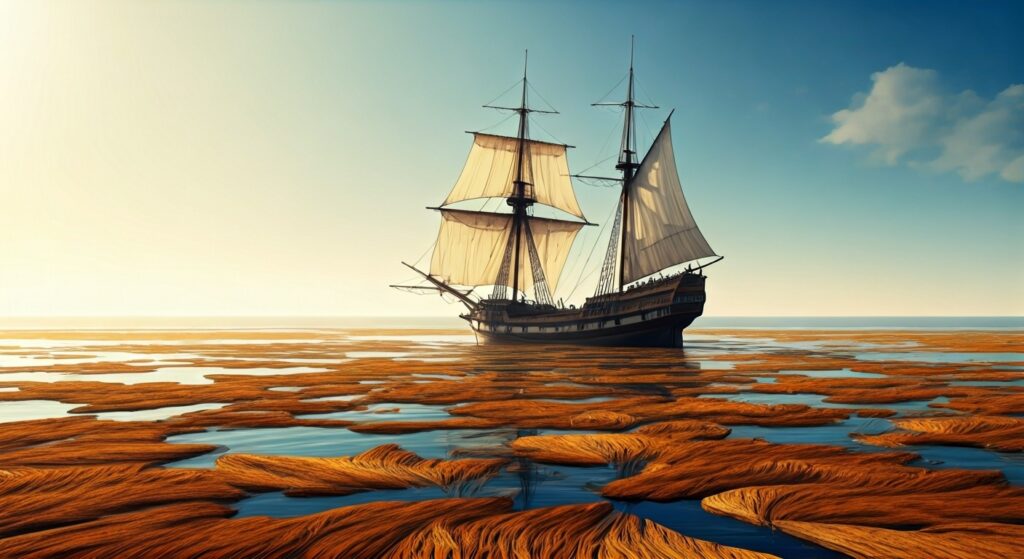
When Christopher Columbus first drifted into these waters in 1492, his crew nearly lost their minds. Surrounding the Santa María were vast, unbroken mats of golden-brown seaweed stretching to the horizon. Columbus’s men were convinced these thick, creeping vines hid treacherous, hull-shattering shallows—or worse, that the weeds would entangle the ship and hold them hostage until they starved.
This seaweed is a genus of macroalgae called Sargassum. Unlike normal seaweed that anchors to the ocean floor, these species spend their entire life cycle floating on the open ocean, kept buoyant by tiny, gas-filled bladders. Early Portuguese sailors thought these bladders resembled a type of grape called sargaço, giving the sea its name.
For centuries, nautical myths painted the Sargasso Sea as a cursed “graveyard of ships.” Legends whispered of doomed vessels and their skeletal crews permanently ensnared in the creeping vines, rotting under a baking sun.
The truth, however, was far more insidious. The seaweed itself wasn’t strong enough to trap a ship. The real killer was the sky above. The Sargasso Sea sits squarely within the “horse latitudes”—a meteorological dead zone characterized by high atmospheric pressure and notoriously weak, unpredictable winds. Sailing ships could be becalmed here for weeks. The seaweed wasn’t grabbing the ships; the ships simply couldn’t escape it.
The Golden Oasis
But nature loves a plot twist. What was a psychological horror show for 15th-century sailors is actually one of the most vital ecosystems on the planet.
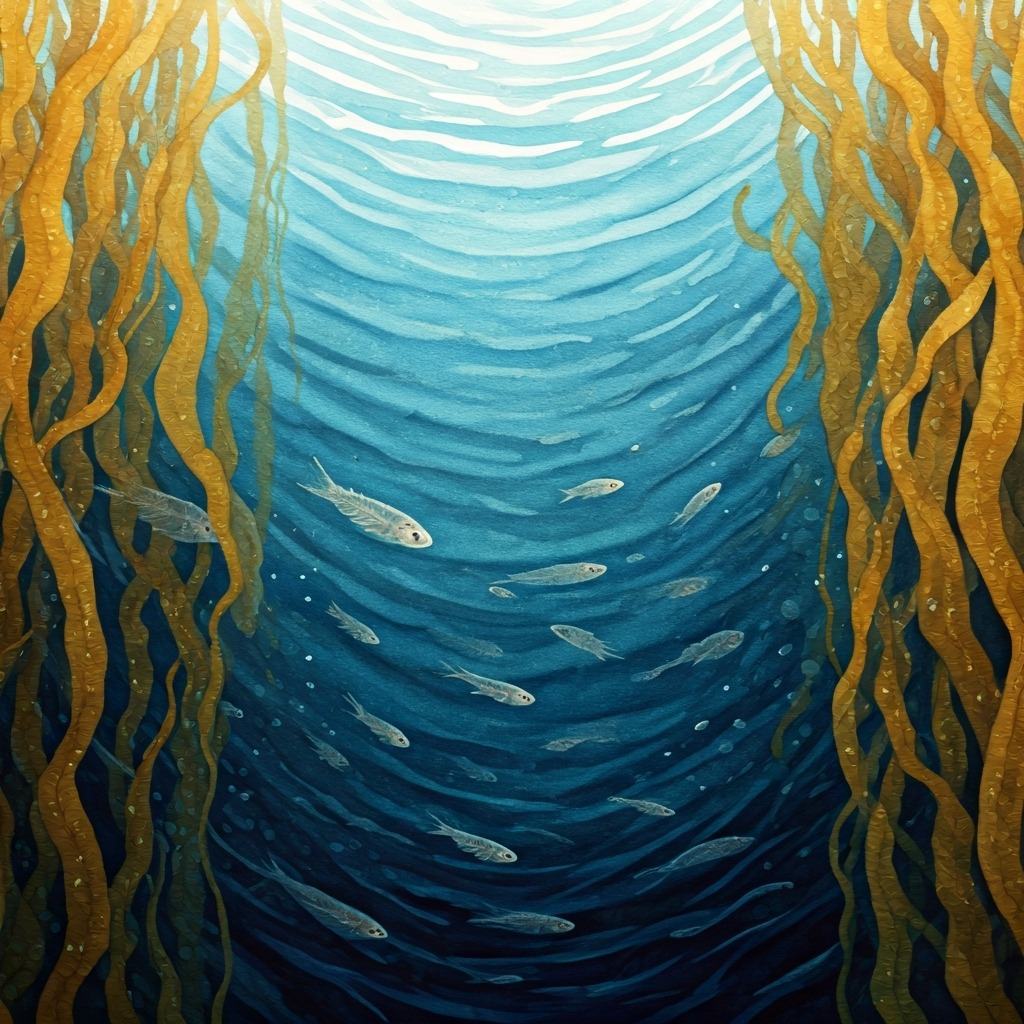
The open ocean is generally a barren desert, lacking the nutrients necessary to sustain large populations of sea life. But this massive, swirling mat of seaweed creates an oasis. Marine biologists call the Sargasso Sea a “golden floating rainforest.” It is a crucial habitat and nursery for a staggering diversity of marine creatures. It hides highly adapted predators like the Sargassum fish, which evolved to perfectly mimic the fronds of the seaweed. Endangered loggerhead sea turtles spend their vulnerable youth hiding in the mats, while apex predators like tuna, marlin, and sharks patrol the dark waters below.
Even more incredibly, this sea is the stage for one of nature’s greatest unsolved mysteries. It is the sole known spawning ground for both European and American eels. These bizarre creatures travel thousands of miles from freshwater rivers across the globe, navigating blindly into the heart of the Sargasso Sea just to breed and die. Afterward, their transparent, leaf-like larvae drift back along the currents to the rivers their parents came from. How they navigate this epic journey remains one of the wildest secrets of the animal kingdom.
A Modern-Day Monster
Today, the Sargasso Sea faces a threat far more terrifying than a lack of wind. The exact same swirling currents that gather the life-giving Sargassum also act as a massive oceanic vacuum for human pollution.
The sea has become a major accumulation zone for microplastics, forming what is known as the North Atlantic Garbage Patch. Furthermore, changing global temperatures and agricultural runoff have altered Sargassum growth patterns, causing massive, disruptive blooms to wash ashore in the Caribbean and West Africa.
The ocean is a wild, untamable place. It can be a graveyard, a nursery, and a mystery all at once. The Sargasso Sea remains a testament to the eerie, quiet power of nature—a creeping, golden, shoreless world that continues to captivate and terrify those who dare to enter it.