The Ultimate Invitation
Imagine receiving a summons to the most exclusive dinner party in the known world. You are a member of Rome’s elite, and the invitation comes directly from the imperial palace. To decline is treason; to attend is to step into the unpredictable orbit of the most powerful teenager on earth.
Emperor Elagabalus, born Varius Avitus Bassianus, ascended to the throne in 218 AD at the terrifying age of fourteen. Handing a modern teenager absolute, unchecked dominion and an infinite treasury would be a recipe for disaster. In ancient Rome, it birthed a four-year reign defined by extreme religious subversion, sexual transgression, and bizarre, theatrical displays of wealth.
But of all the scandalous rumors surrounding this teenage tyrant, one legendary event stands out as the ultimate, horrifying intersection of luxury and cruelty. It was a banquet where surviving the final course was not on the menu.
The Trap Above the Table
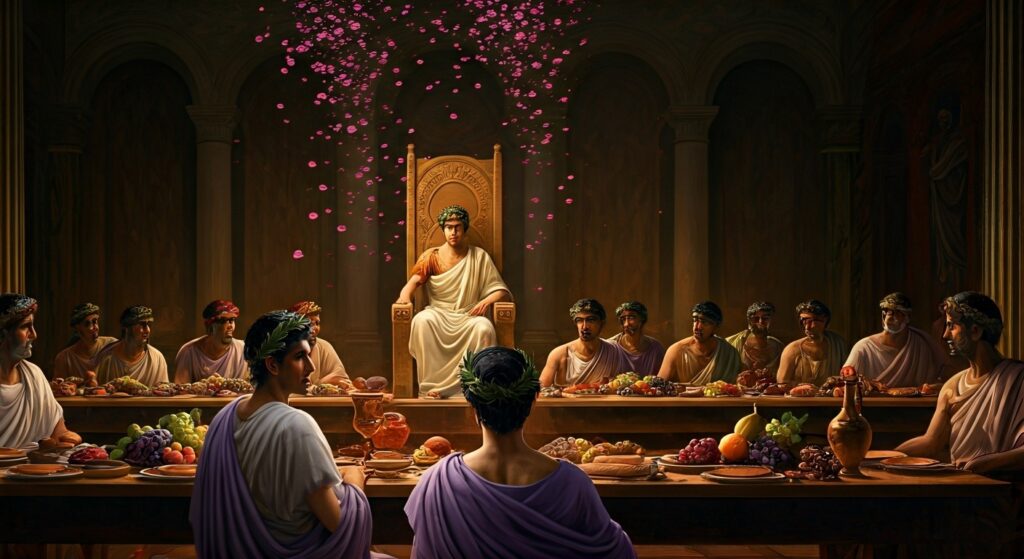
You arrive at the grand banquet hall. The opulence is staggering, designed to overwhelm the senses. Wine flows endlessly, the food is unimaginably decadent, and the air is thick with the intoxicating, heavy scent of exotic perfumes. The emperor, eccentric as ever, presides over the feast.
As the revelry reaches its crescendo, a strange, mechanical grinding echoes from the rafters.
Unbeknownst to the aristocratic guests below, Elagabalus had secretly ordered a false, reversible ceiling installed in the dining room. Without warning, the ornate panels above suddenly gave way.
Drowning in Beauty
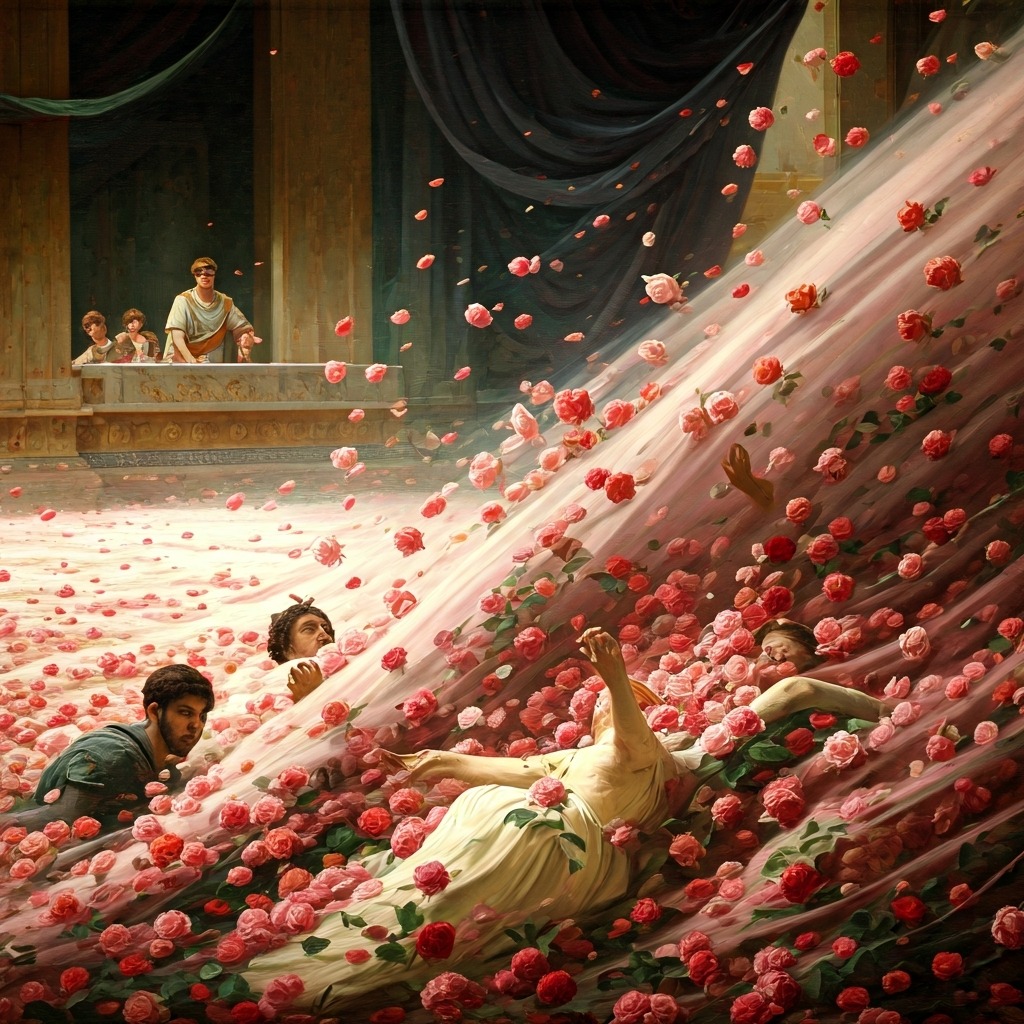
At first, it must have seemed like a breathtaking theatrical display. An avalanche of flower petals—thousands upon thousands of roses and violets—cascaded down upon the diners. The guests likely laughed, holding out their wine-stained hands to catch the fragrant deluge.
But the flowers didn’t stop falling.
The sheer volume of the petals was immense, rapidly filling the cavernous room. Laughter quickly curdled into panic as the heavy, suffocating mass of vegetation swallowed the diners whole. Buried beneath the beautiful, crushing weight of the blooms, Rome’s highest-ranking elites scrambled blindly, fighting for air. Unable to crawl out from beneath the avalanche, several guests literally suffocated to death.
And where was Elagabalus while his courtiers gasped their final breaths? According to the legend, the teenage emperor sat safely above the fray, looking down at the floral tomb and laughing. He had weaponized luxury, turning a universal symbol of beauty into an instrument of bizarre, aesthetic execution.
The Ancient Smear Campaign
It is a chilling, cinematic story of absolute power gone mad. But there is a twist to this macabre tale: history is often written by the victors, and sometimes, the most captivating stories are entirely fabricated.
The primary source for this deadly banquet is the Historia Augusta, a late Roman collection of imperial biographies notorious for its sensationalism. Modern historians approach this ancient text as ancient political propaganda.
When an unpopular Roman emperor was assassinated, the succeeding regime would often enact damnatio memoriae—the total condemnation of their memory. To legitimize the new ruler, writers were tasked with making the dead emperor look as depraved, unhinged, and monstrous as humanly possible.
Interestingly, Elagabalus’s actual contemporaries, like the historians Cassius Dio and Herodian, thoroughly documented his deeply bizarre behavior. Yet, neither mentions a word about a mass murder by flower petals. Today, most skeptical historians view the deadly banquet as a gross exaggeration of a harmless practical joke, or a complete literary invention designed to illustrate the fatal excess of a “bad emperor.”
A Lethal Legacy on Canvas
Whether it was a historical reality or ancient fake news, the story of the deadly banquet was simply too captivating to fade away. It became a timeless allegory for the dangers of unchecked power and the morbid aestheticization of death.
The legend gained a massive resurgence in the late 19th century, thanks to the Anglo-Dutch artist Sir Lawrence Alma-Tadema. His 1888 masterpiece, The Roses of Heliogabalus, perfectly captures the exact, terrifying moment the ceiling opens. The painting shows beautiful, languid guests drowning in a sea of pink petals while the emperor gazes down with cold, impassive cruelty.
It’s an image that cemented the myth in our modern imagination. True or not, the tale of Elagabalus’s deadly feast endures because it taps into a primal fear: that beneath the veneer of ultimate luxury and absolute power lies a trap door, waiting to open.