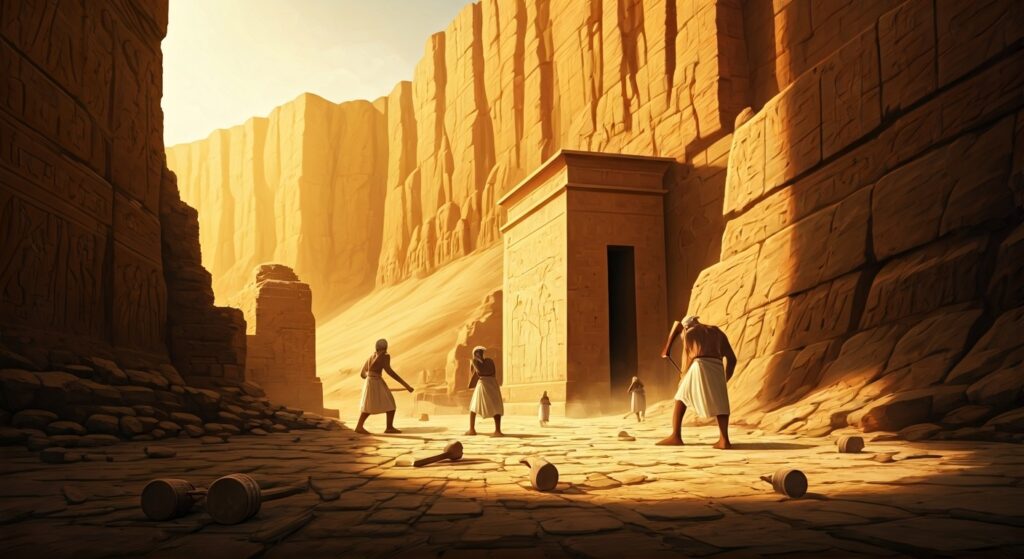
The year was 1152 BC, and beneath the blistering Egyptian sun, an unthinkable silence fell over the Valley of the Kings. The rhythmic, echoing strikes of copper chisels against limestone simply stopped.
When we picture ancient Egypt, we envision untouchable pharaohs, golden death masks, and a society moving in perfect, unquestioning obedience to a living god. But history is rarely that neat. Over three millennia ago, the invisible machinery of the Egyptian empire ground to a terrifying halt when a group of highly specialized workers decided they had finally had enough.
They dropped their tools, walked off the job, and staged the very first recorded labor strike in human history.
The Masters of Eternity
To understand the sheer audacity of this rebellion, one must look to a secluded desert village called Set Maat (known today as Deir el-Medina). This was no ordinary farming community. Set Maat was a restricted, heavily guarded settlement built expressly for the elite stonecutters, carpenters, draftsmen, and painters who constructed the royal tombs.
These artisans were not slaves. They were the absolute best at what they did, tasked with engineering the pharaoh’s immortality, and they were compensated accordingly. Yet, because they lived in a barren, sun-scorched valley where farming was impossible, they were entirely dependent on the Egyptian state. They were paid in monthly rations: emmer wheat for bread, barley for beer, fish, vegetables, and occasional luxuries like fine linens and soothing ointments.
For generations, this gilded cage operated flawlessly. But in the 29th year of Pharaoh Ramses III’s reign, the empire began to quietly bleed dry.
A Crack in the Cosmic Order
A series of exhausting defensive wars against the mysterious Sea Peoples had drained the royal treasury. Compounding the crisis, administrative corruption ran rampant while Ramses III poured unimaginable wealth into his lavish Heb-Sed (jubilee festival) and a colossal mortuary temple at Medinet Habu.
At Set Maat, the artisans felt the empire’s strain when their paychecks simply stopped arriving.
Days turned into weeks. Weeks bled into months. The village granaries sat hollow and dusty. For the ancient Egyptians, this wasn’t merely a breach of contract—it was a catastrophic violation of Ma’at, the fundamental cosmic balance of truth and justice. If the Pharaoh, the living embodiment of the gods, could not feed his most vital workers, the entire universe was tilting out of alignment. Starving, exhausted, and deeply disillusioned, the workers reached their breaking point.
The Unthinkable Rebellion
When the tension finally snapped, it was spectacular. The artisans didn’t just complain to their foremen; they organized.
Laying down their tools, they marched out of their secluded village. Bypassing their immediate supervisors, the furious mob headed straight for the administrative centers and the grand mortuary temples, including the Ramesseum.
They staged sit-ins. They occupied the sacred, restricted spaces where they knew wealthy priests and state officials could not ignore them. According to historical records, they shouted their grievances directly into the faces of the elite: “We are hungry and thirsty!” They demanded their complaints be escalated to the Vizier, or even to Ramses III himself.
Panic and Pastries
Local officials were utterly bewildered. This level of grassroots defiance was unprecedented. Imagine the absolute panic of these bureaucrats, scrambling to handle a mob of angry, indispensable artists who were suddenly refusing to build the king’s afterlife. They couldn’t execute them—who else possessed the sacred knowledge to carve the royal tombs?
In a desperate bid to make the problem disappear, panicked scribes tried to appease the striking workers with temporary measures. They literally handed out pastries and partial rations, hoping a quick sugar rush would send the men back to the valley.
The artisans held their ground. They refused to lift a single chisel until their full, rightful wages were delivered.
The Scribe Who Wrote History
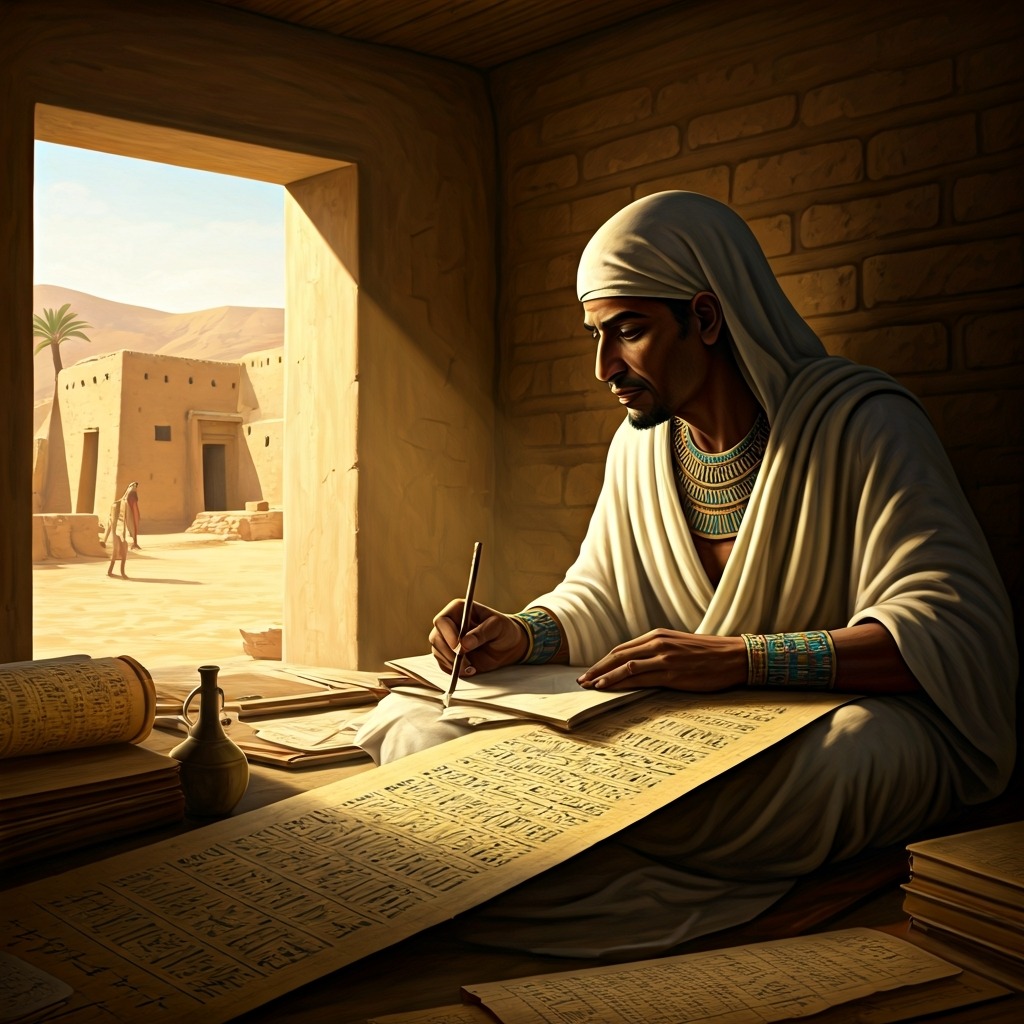
We only know the intimate details of this incredible standoff because of a village scribe named Amennakht. While the state was busy carving exaggerated military victories onto temple walls, Amennakht meticulously documented the workers’ struggle on what is now known as the Turin Strike Papyrus.
Amennakht’s account shifts our gaze away from the gods and pharaohs, offering a rare, ground-level perspective of everyday people fighting for their dignity.
Ultimately, the strike was a success. The state caved, and the owed grain was delivered to Set Maat. But the cosmic seal had been broken. The workers had proven that a pharaoh could be defied. Strikes would continue sporadically throughout the rest of Ramses III’s reign, setting a precedent that marked the beginning of a slow, irreversible decline in the centralized power of the New Kingdom. The demand for fair compensation, it turns out, is not a modern invention—it is an ancient, deeply human instinct.