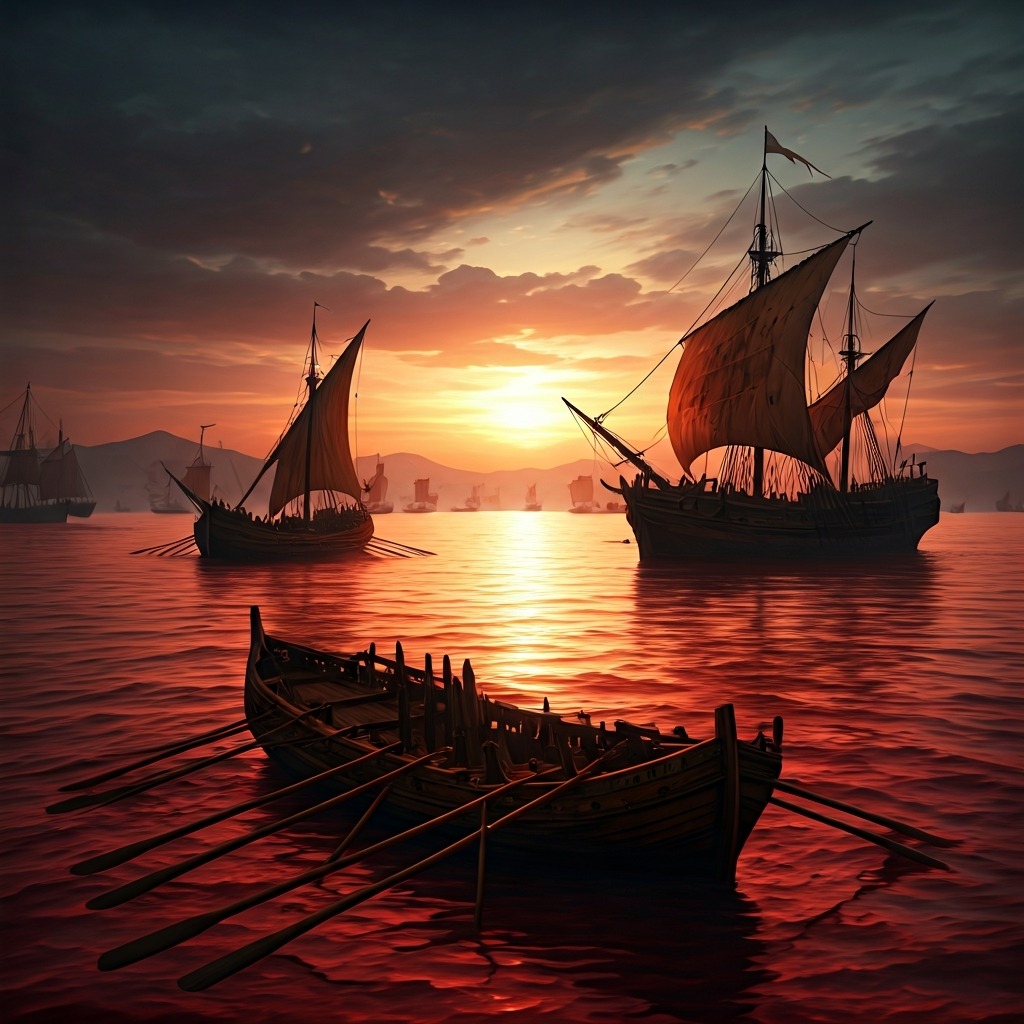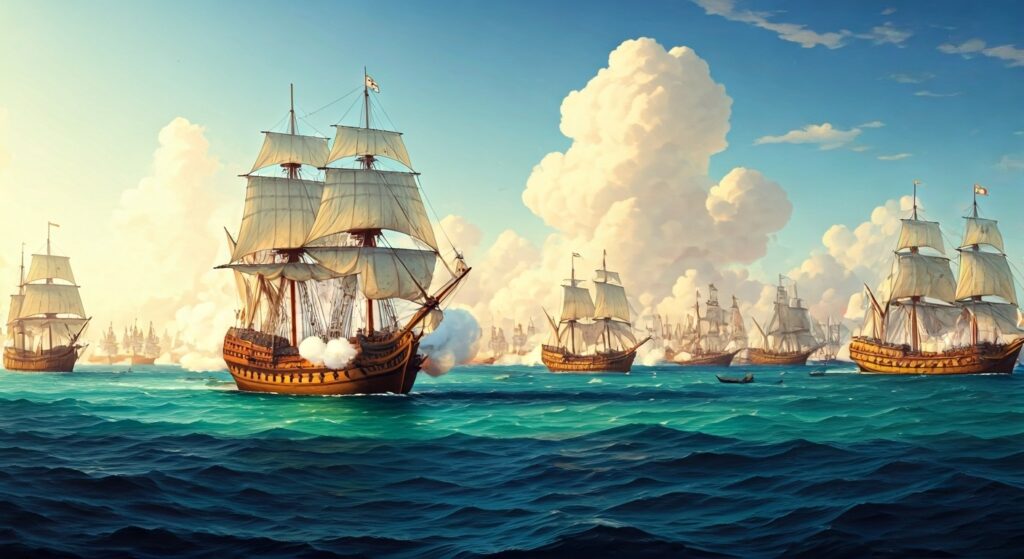
On the morning of October 7, 1571, the Gulf of Patras was eerily quiet—until the horizon darkened with the silhouettes of over 400 warships. This was not a day for graceful naval maneuvers. This was the day 100,000 heavily armed men would turn the Mediterranean into a floating slaughterhouse.
A Collision Course in the Gulf
By the late 16th century, the Ottoman Empire was an unstoppable juggernaut. Under the rule of Selim II, their naval forces were rapidly turning the Mediterranean into a private lake, having recently ripped Cyprus from Venetian control.
Desperate to halt this terrifying advance, Pope Pius V hit the panic button. He orchestrated the Holy League—an unprecedented, shaky coalition of Catholic maritime powers including Spain, Venice, Genoa, and the Knights of Malta. To lead this massive armada, they chose Don John of Austria. At just 24 years old, the illegitimate half-brother of King Philip II of Spain was bursting with the kind of charismatic bravado that only comes from having everything to prove.
Waiting for him off the western coast of Greece was the Ottoman grand admiral, Müezzinzade Ali Pasha. The stage was set for the largest naval battle the Western world had seen since the days of the Roman Empire.
The Monsters at the Front of the Line
If you picture naval warfare as ships gracefully circling each other and firing broadside cannons from a distance, erase that from your mind. The Battle of Lepanto was the last major engagement fought almost entirely between rowing vessels.
This wasn’t a naval battle; it was a floating infantry war. The goal wasn’t to sink the enemy ship from afar. The objective was to fire forward-facing guns to soften up the target, violently ram their wooden hull, throw grappling hooks, and turn the decks into a blood-soaked melee of swords, pikes, and early firearms.
But the Holy League brought a secret weapon to this knife fight: six Venetian galleasses.
These weren’t standard galleys. They were heavily modified, massive merchant ships transformed into floating fortresses. Positioned a half-mile ahead of the Catholic line, these behemoths possessed 360-degree artillery capabilities. As the Ottoman fleet rowed forward, expecting a traditional clash, the galleasses unleashed a devastating, multi-directional bombardment. The element of surprise was absolute. Dozens of Ottoman ships were shattered and sunk before the main fleets even collided.
The Beheading of an Admiral
Despite the early shock, the sheer momentum of over 400 galleys carrying upwards of 100,000 men could not be stopped. The fleets slammed together, locking their wooden hulls in a chaotic, grinding embrace.
The climax of the battle occurred right in the center of the carnage. Don John of Austria spotted the magnificent flagship of Ali Pasha, the Sultana. In a move of pure, reckless aggression, Don John ordered his own flagship, the Real, to directly ram the Ottoman commander’s vessel.
The two massive ships locked together, becoming a single, floating battlefield. Spanish infantry, wielding heavy arquebuses, poured onto the Sultana, clashing with elite Ottoman Janissaries armed with deadly composite bows. The fighting was suffocating, intimate, and brutally efficient.
In the chaos of the hand-to-hand combat, a musket ball struck Ali Pasha in the head. Before the Ottoman lines could even process what had happened, a Spanish soldier rushed forward and beheaded the grand admiral. Ali Pasha’s head was hoisted onto a pike aboard the Real.
When the surrounding Ottoman forces saw their invincible commander’s head silhouetted against the smoke-filled sky, their morale completely evaporated. The line collapsed.
The Writer Who Refused to Hide
Down in the suffocating lower decks of the galley Marquesa, a 24-year-old Spanish soldier was burning up with a severe fever. His captain ordered him to stay below and ride out the battle.
The young man refused. He demanded to be placed in the most dangerous position on the ship, arguing that he would rather die fighting for his God and his king than hide below deck. He fought fiercely, taking two gunshot wounds to the chest and a third that permanently shattered his left arm.
That stubborn soldier was Miguel de Cervantes, who would survive his maiming to eventually write the literary masterpiece Don Quixote. He would later look back on the bloodbath at Lepanto not with horror, but with immense pride, calling it “the most noble and memorable event that past centuries have seen.”
The Red Sea
The sheer violence of Lepanto is hard to comprehend. The entire battle lasted only about five hours, but when the smoke finally cleared, the water was choked with splintered wood and bodies.
Between 30,000 and 40,000 men were dead.
The Holy League captured or destroyed over 200 Ottoman ships and liberated an estimated 12,000 to 15,000 Christian galley slaves who had been chained to the Ottoman oars. While the Ottoman Empire had the immense wealth and timber to rebuild its ships within a year, the true loss was irreplaceable: thousands of highly trained sailors, elite Janissaries, and master bowmen were resting at the bottom of the Gulf of Patras.
Lepanto permanently shattered the psychological myth of Ottoman naval invincibility. It halted their expansion into the western Mediterranean and fundamentally altered the geopolitical balance of the 16th century, proving that even the most unstoppable empires could bleed.