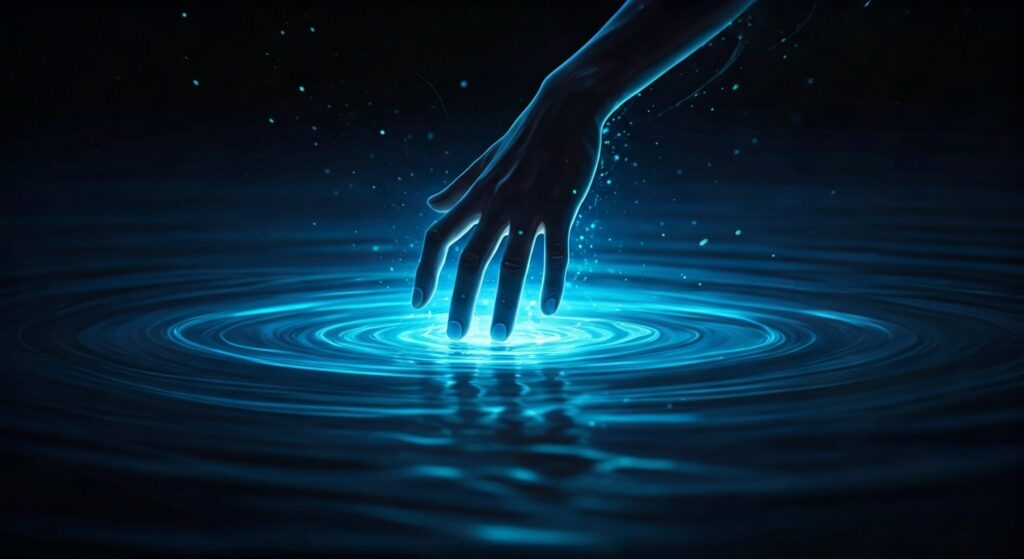
Imagine dipping your hand into the pitch-black ocean at midnight, only to watch the water erupt into a swirling, neon-blue galaxy. Every movement leaves a glowing, ethereal trail of cold fire. It looks like pure magic, but the truth behind this phenomenon is far stranger.
The story of Puerto Mosquito—a bay on the southern shore of the Puerto Rican island of Vieques—is a bizarre tale of microscopic defense mechanisms, geographical anomalies, and a dark twist of fate involving the United States military.
The Bay That Swallows the Stars
Puerto Mosquito is not just a picturesque Caribbean beach; it is a biological marvel. The mesmerizing blue-green glow radiating from its waters is so intense that Guinness World Records officially recognized it as the brightest bioluminescent bay on the planet.
But what exactly is lighting up the dark?
The secret lies in an invisible army of single-celled organisms called dinoflagellates, specifically a species known as Pyrodinium bahamense. When these microscopic creatures are agitated by the movement of a fish, a boat hull, or a swimmer’s hand, a sudden chemical reaction triggers inside their cells. The light-emitting molecule luciferin reacts with the enzyme luciferase, producing a brilliant flash of light.
A Microscopic Burglar Alarm
Nature rarely does anything just for show. Evolutionary biologists have deduced that this dazzling display is actually a desperate defense mechanism.
When a tiny predator tries to eat the dinoflagellate, the resulting flash of light startles the attacker. More importantly, it acts as a neon sign in the pitch-black water, highlighting the attacker’s exact location to larger, secondary predators. It’s the microscopic equivalent of shining a spotlight on a thief so the neighborhood watch can take them out.
But why is this specific bay in Vieques so much brighter than anywhere else? It comes down to a perfect, inescapable ecological trap. Puerto Mosquito features a narrow bottleneck entrance connecting it to the Caribbean Sea. The tide pushes the dinoflagellates into the bay, but the restrictive geography prevents them from easily washing back out.
Surrounding this shallow, trapped body of water are dense forests of red mangroves. As the mangrove leaves drop into the water and decay, they release massive amounts of nutrients, particularly Vitamin B12, creating an all-you-can-eat buffet that allows the dinoflagellates to multiply to staggering concentrations.
The Accidental Guardian
Across the Caribbean, similar bioluminescent bays have been dimmed or entirely destroyed by commercial development, light pollution, and chemical runoff. So, how did Puerto Mosquito survive untouched?
The answer is a dark, ironic twist of history.
For over sixty years, the United States Navy used Vieques as a bombing range and military training facility. The presence of the military caused immense environmental and social distress for the island’s residents. However, the Navy’s strict, uncompromising control over the land directly surrounding Mosquito Bay inadvertently acted as an impenetrable shield. It kept out the resort developers, the bulldozers, and the artificial lights.
When the Navy finally departed in 2003, the untouched bay was transitioned into a protected wildlife refuge, its brilliant glow preserved by decades of isolation.
The Storm That Stole the Light
For years, the bay thrived under its new protected status. But in 2017, the resilience of this fragile ecosystem faced an apocalyptic test.
Hurricane Maria devastated Puerto Rico, tearing across the island with catastrophic winds and massive storm surges. The violence of the hurricane violently flushed the bay, drastically altering the water’s salinity and dynamics. Worse, the ferocious winds stripped the surrounding red mangroves of their leaves—the vital food source for the dinoflagellates.
In the weeks that followed, locals and researchers ventured out into the bay at night, only to find something terrifying: the water was pitch black. The bioluminescence was gone. Many feared the brightest bay in the world had been extinguished forever.
A Neon Resurrection
Nature, however, is notoriously stubborn.
Slowly, the mangroves began to heal. The bottleneck geography once again began trapping the Pyrodinium bahamense brought in by the tides. Within months, a faint glimmer returned to the waters of Vieques.
Then, something miraculous happened. By 2018, the ecosystem hadn’t just recovered; it had overcompensated. The concentration of dinoflagellates multiplied to record-breaking levels, making Puerto Mosquito brighter than it had been in decades. The hurricane, it turned out, had essentially hit a massive reset button on the bay’s ecology.
Today, the glowing waters of Vieques stand as a testament to a delicate, improbable balance. It took a narrow geographical bottleneck, decaying mangrove leaves, a microscopic burglar alarm, and the unintended protection of a military bombing range to create one of the most spectacular natural wonders on Earth.