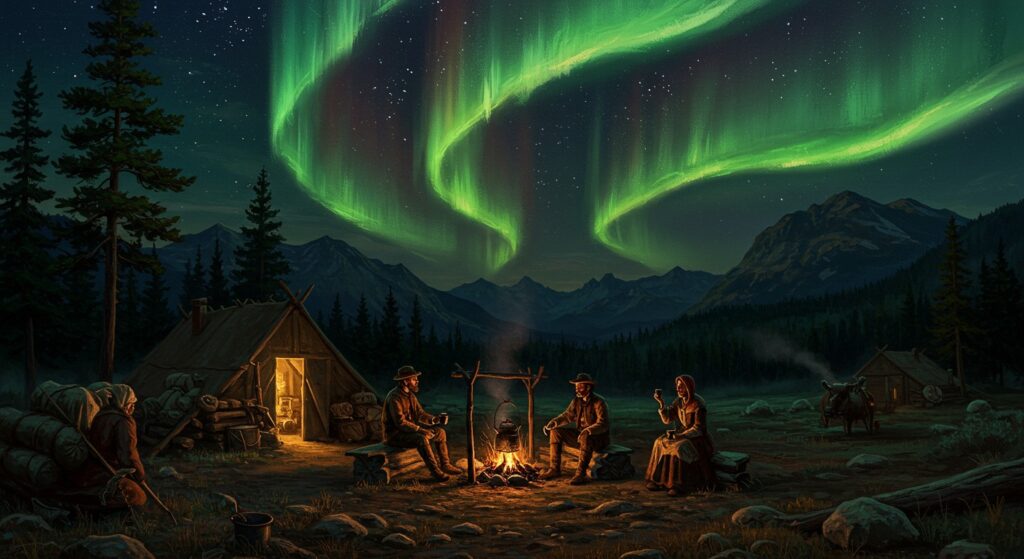
Imagine waking in the dead of night, the sky above you so blindingly bright you genuinely believe the sun has already crested the horizon. That is exactly what happened to a camp of gold miners in the Rocky Mountains during the late summer of 1859. Disoriented by the brilliant illumination, they dragged themselves out of bed, brewed coffee, and began frying up breakfast.
They had no idea the sun hadn’t risen early. They were completely unaware they were standing in the crosshairs of a cosmic sniper, witnessing the opening salvo of the most intense geomagnetic storm in recorded history. The heavens above them were glowing in violent, pulsating shades of blood-red and emerald green.
A Blinding Flash in the Lens
The mystery had begun one day earlier, on September 1, 1859. In a quiet observatory, British astronomer Richard Carrington was routinely sketching a complex, dark cluster of sunspots. Without warning, two brilliant patches of light erupted from the cluster. Independently, another astronomer, Richard Hodgson, witnessed the exact same anomaly.
They had just observed a massive ‘white light flare’—a solar explosion of unprecedented magnitude.
But the flare was only the flash of the muzzle. The bullet was a Coronal Mass Ejection (CME): a billion-ton cloud of electrified gas and subatomic particles hurtling directly toward Earth. Under normal circumstances, a CME takes several days to cross the 93 million miles of space between the Sun and our planet. This one, however, was riding the slipstream of a smaller, earlier eruption that had effectively swept the ambient solar wind out of the way.
The supercharged cloud covered the distance in an astonishing 17.6 hours. Earth’s magnetic shields were completely unprepared for the impact.
The Sky on Fire
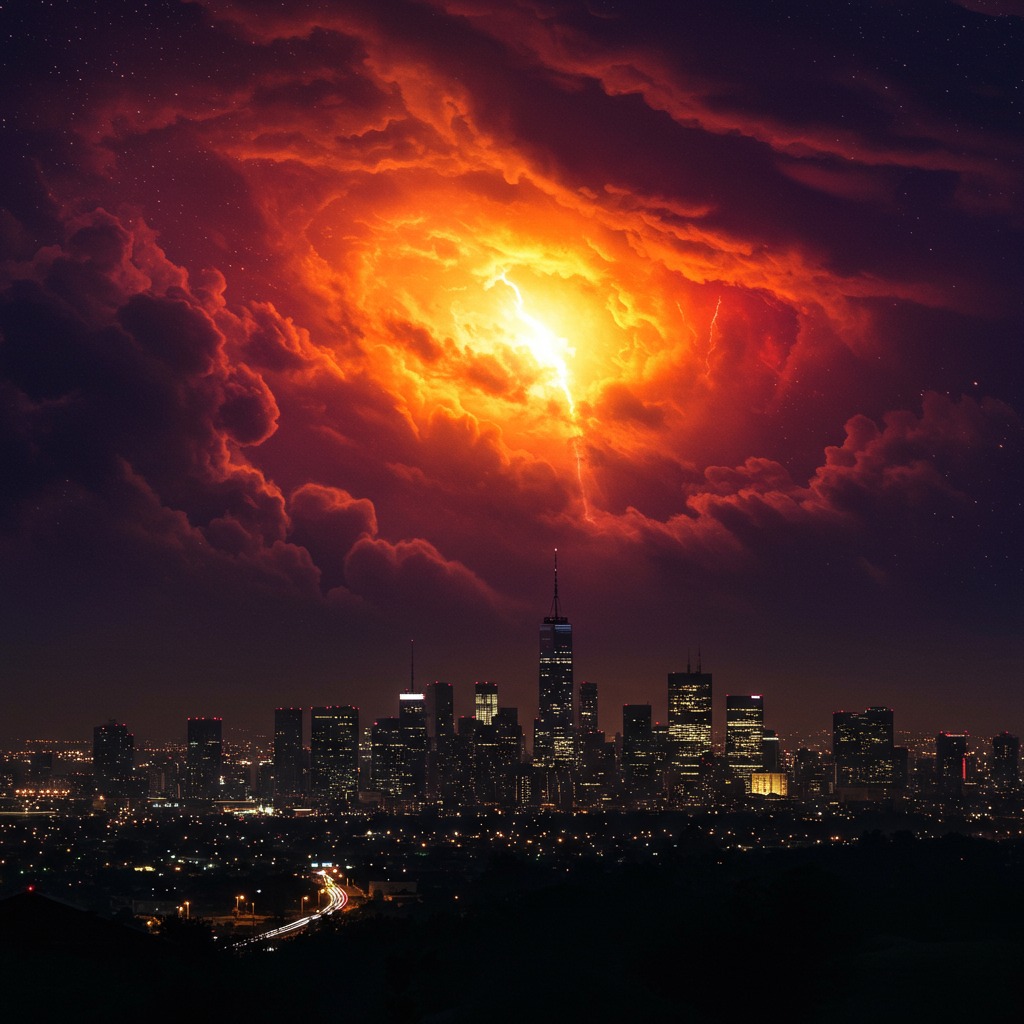
When the CME slammed into Earth’s magnetosphere, the atmosphere ignited in a mesmerizing but terrifying display. Auroras, normally confined to the extreme polar regions, were violently pushed toward the equator.
The night sky burned with luminous ribbons of purple, red, and green. These auroras were reported as far south as the Caribbean, Hawaii, Mexico, Colombia, and Sub-Saharan Africa. The illumination was so intense that nocturnal birds awoke and began to chirp, and people in city streets realized they could easily read their midnight newspapers by the ambient glow of the sky.
It was an aesthetic marvel, but the breathtaking lights masked a destructive, invisible force quietly tearing through the world’s cutting-edge technology.
The Ghost in the Wires
In 1859, the telegraph was the pinnacle of human innovation—the Victorian era’s version of the internet. As the geomagnetic storm raged overhead, it induced massive, uncontrolled electrical currents into the millions of miles of copper wire crisscrossing North America and Europe.
Suddenly, the telegraph networks went haywire. Operators sitting at their desks were thrown back, receiving severe electrical shocks just from touching their equipment. Sparks flew wildly from telegraph keys. In several terrifying instances, the arcing electricity ignited the telegraph paper, causing spontaneous fires in offices.
Then, something truly bizarre happened. The ambient electrical charge in the atmosphere became so overwhelmingly powerful that telegraph operators in Boston and Portland realized they didn’t even need their power sources. They completely disconnected their batteries and successfully transmitted messages back and forth using nothing but the “auroral current” flowing invisibly through the air.
A Ticking Clock in the Cosmos
From a scientific standpoint, the “Carrington Event” changed everything. It provided the very first definitive proof that solar activity could directly trigger terrestrial magnetic disturbances, single-handedly birthing the modern field of space weather. Before 1859, scientists largely dismissed the idea that the Sun could reach out and touch the Earth so violently.
But when we look back at the Carrington Event through a modern lens, awe quickly turns to dread.
In 1859, humanity’s reliance on electricity was in its infancy. Today, our entire civilization is built on a fragile, highly sensitive grid of technology. If a Carrington-class event were to strike the Earth today, the induced currents would be catastrophic. The storm would melt massive, irreplaceable transformers, triggering global blackouts that could last for months. The barrage of radiation would fry the delicate electronics of thousands of satellites in orbit, instantly crippling global GPS, internet routing, and communication networks.
Experts warn that a direct hit from a similar solar storm today could cause trillions of dollars in economic damage and take years to fully repair. The Carrington Event is no longer just a fascinating piece of Victorian history; it is a looming existential warning, reminding us just how quickly the cosmos could plunge our heavily electrified world back into the dark ages.