The wind howling across the northern Ural Mountains in the winter of 1959 carried a secret that would baffle investigators, scientists, and historians for over six decades. It is a story of Cold War paranoia, inexplicable forensics, and spine-tingling suspense. Welcome to the ultimate unsolved mystery: The Dyatlov Pass Incident.
A One-Way Ticket to “Dead Mountain”
In late January 1959, a group of ten experienced ski hikers—mostly students and recent graduates from the Ural Polytechnical Institute—set out on an expedition across the unforgiving northern Urals. Led by a 23-year-old named Igor Dyatlov, their ultimate goal was to reach the summit of Mount Otorten.
Early in the trek, one member of the group, Yuri Yudin, was forced to turn back due to severe joint pain. While he was likely devastated to miss the adventure, that flare-up ultimately saved his life, making him the expedition’s sole survivor.
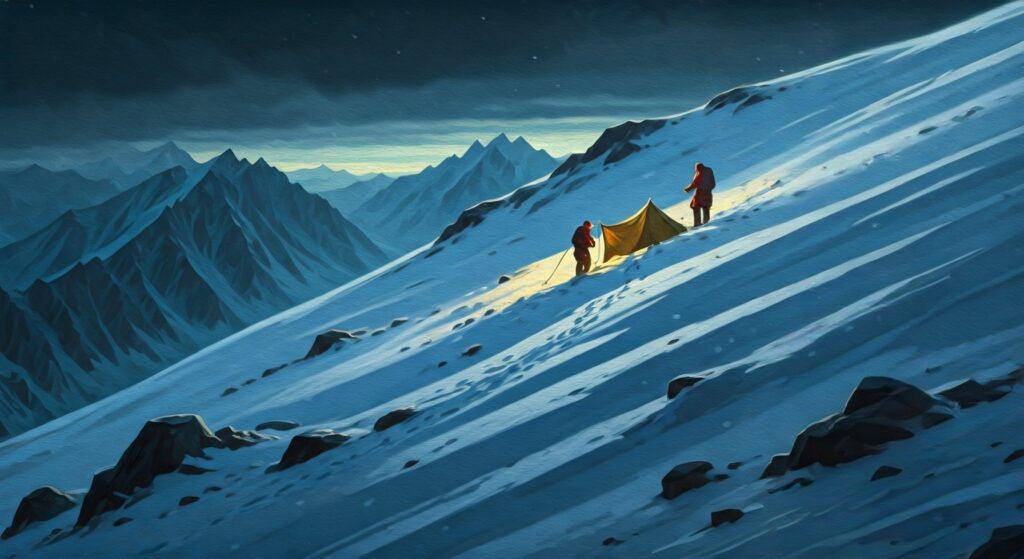
The remaining nine hikers pressed on into the freezing wilderness. On February 1, they set up camp on the eastern slope of Kholat Syakhl. In the indigenous Mansi language, the name translates ominously to “Dead Mountain.” It was a moniker that was about to live up to its terrifying reputation.
The Slashed Tent and the Silent Snow
The group had scheduled a telegram to be sent by mid-February to confirm their safe return. When the date came and went with total radio silence, a massive search and rescue operation was launched into the frozen peaks.
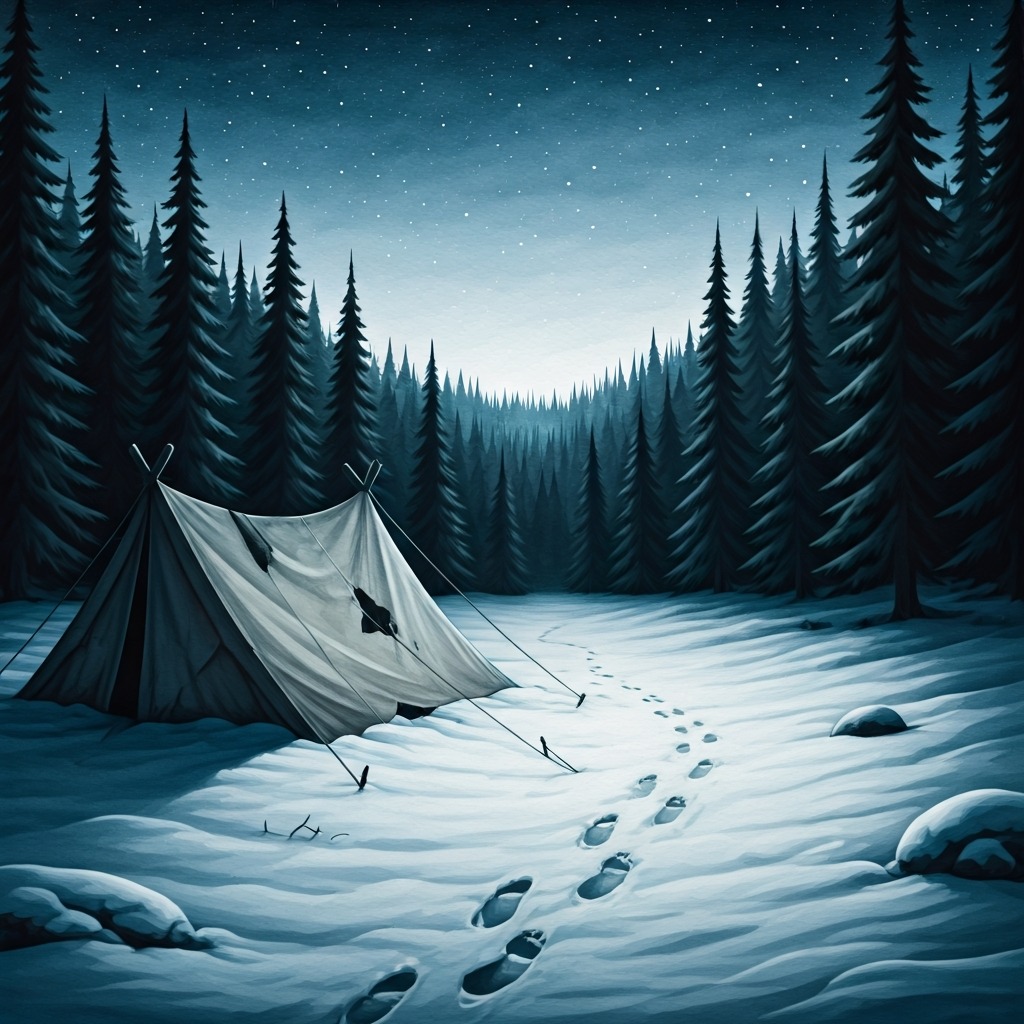
On February 26, searchers finally found the group’s camp. What they discovered was a scene frozen in pure, unadulterated panic. The tent was half-torn down and buried under the snow. Most bizarrely, it had been slashed open from the inside.
The hikers’ heavy coats, boots, and vital survival gear were all left behind in the freezing tent. Leading away from the campsite and toward the dark tree line of a nearby forest were nine sets of footprints. Some prints showed hikers wearing only socks, a single shoe, or walking completely barefoot into the sub-zero night. Whatever they were running from, it was terrifying enough that they chose the lethal cold over staying one more second in that tent.
The Cedar Tree Macabre
The discovery of the bodies unfolded in two grim stages, shifting the story from a tragic accident into a full-blown mystery.
The first two bodies were found at the edge of the forest under a massive cedar tree. They were dressed only in their underwear, lying next to the remains of a makeshift fire. When investigators looked up, they noticed the branches of the cedar tree were snapped off up to five meters high. Someone had desperately climbed that tree—either to look back toward the tent or to escape something lurking on the ground.
Three more bodies, including Igor Dyatlov himself, were found frozen in the snow between the cedar tree and the tent. Based on their positioning, they had been desperately trying to crawl back to camp. Autopsies concluded that all five of these hikers died of hypothermia, though one had a minor skull fracture. If the story ended here, it would be a tragic case of exposure. But the mountain had more secrets to yield.
The Ravine of Horrors
The remaining four hikers weren’t found until May, buried under four meters of snow in a deep ravine further into the woods. When medical examiners performed their autopsies, the results defied all logic.
These four hadn’t just frozen to death; they had suffered catastrophic, blunt-force trauma. Two of the hikers had massive chest fractures that doctors compared to the impact of a high-speed car crash. Another had a severe skull fracture. Yet, chillingly, there were no external wounds associated with these fractures. It was as if their bodies had been crushed by an immense, invisible pressure.
Adding to the nightmare, some of the bodies were missing soft facial tissues. Eyes were gone, and in one case, a tongue was missing entirely. To throw a layer of Cold War espionage into the mix, investigators found trace levels of radioactivity on several pieces of their clothing.
Glowing Spheres and Cold War Paranoia
For decades, the Soviet government’s official conclusion was that the hikers died from a “compelling natural force.” Naturally, this vague explanation became a breeding ground for conspiracy theories.
Initial suspicion fell on the indigenous Mansi people, but investigators quickly ruled them out. There were no other footprints in the snow, and no human could have inflicted the sheer, crushing force seen on the ravine victims without leaving a mark.
Then came the military theories. Another hiking group, camped about 50 kilometers away on the night of the incident, reported seeing glowing orange spheres in the sky. Proponents of the military theory suggest the hikers were startled by a secret Soviet weapons test—perhaps parachute mines—which would perfectly explain the concussive injuries, the glowing lights, and the radioactive clothing.
Other theories leaned into weird science, like a “Karman vortex street”—a phenomenon where wind interacting with the mountain’s topography creates low-frequency infrasound waves that induce intense, irrational panic. Some medical experts pointed to “paradoxical undressing,” a documented phenomenon where late-stage hypothermia victims irrationally perceive themselves as burning up and strip off their clothes.
The Avalanche of Evidence
After decades of wild speculation, the Russian government reopened the case in 2019 and concluded that a snow avalanche was to blame. In 2021, modern science provided what is arguably the most compelling explanation yet. Researchers published a study detailing a highly specific “delayed slab avalanche” model.
According to the study, when the hikers cut into the snow slope to pitch their tent, they destabilized the snowpack. Over the next few hours, severe katabatic winds deposited heavy snow directly over the tent. Eventually, a massive, localized block of hard snow crashed down onto them.
This model explains almost everything: the urgent need to slash their way out of the tent, the immediate, panicked evacuation into the freezing night, and the blunt force trauma caused as the heavy block of ice crushed those sleeping on their backs. As for the missing eyes and tongue? Forensic experts now widely attribute that to natural post-mortem scavenging by small animals as the bodies decomposed in a wet ravine.
It is a robust, incredibly well-researched scientific explanation. But even with the physics of a slab avalanche mapped out, the eerie, lingering details of the Dyatlov Pass—the slashed tent, the desperate climb up the cedar tree, the barefoot prints in the snow—ensure it remains one of the most captivating and haunting mysteries of the 20th century.