The morning of December 6, 1917, was bitterly cold in Halifax, Nova Scotia. The port was a congested, chaotic artery of the Allied war machine, packed with transatlantic shipping. But beneath the routine bustle of sailors and dockworkers, an invisible countdown had already begun. It wouldn’t end in a cinematic firefight or a deliberate act of sabotage. It would end with a slow-motion mistake that triggered the largest artificial explosion the world had ever seen—a blast so apocalyptic it would literally serve as the blueprint for the atomic age.
The Floating Powder Keg
Navigating the narrowest stretch of the Halifax harbor—aptly named the Narrows—was a logistical nightmare. Entering this bottleneck was the SS Mont-Blanc, a French cargo ship that looked like any other rusted tramp steamer. In reality, she was a floating weapon of mass destruction.
Packed into her hold was a terrifying chemical cocktail: 2,925 tons of explosives, including TNT, picric acid, and guncotton. Stacked precariously on her deck were barrels of highly flammable benzol.
Steaming in the opposite direction was the SS Imo, a Norwegian vessel chartered for Belgian relief. As the two massive ships converged in the congested channel, a fatal dance of blown whistle signals, miscommunications, and failed evasive maneuvers sealed their fate.
A Collision at Walking Speed
When the two leviathans finally collided, it wasn’t a violent, ear-splitting crash. They struck each other at roughly one knot—barely the speed of a leisurely walk.
The physical impact was incredibly minor, but it was enough. The prow of the Imo breached the Mont-Blanc’s hull, toppling the deck-bound barrels of benzol. The highly volatile liquid cascaded across the deck and poured directly into the hold, soaking the mountain of high explosives below.
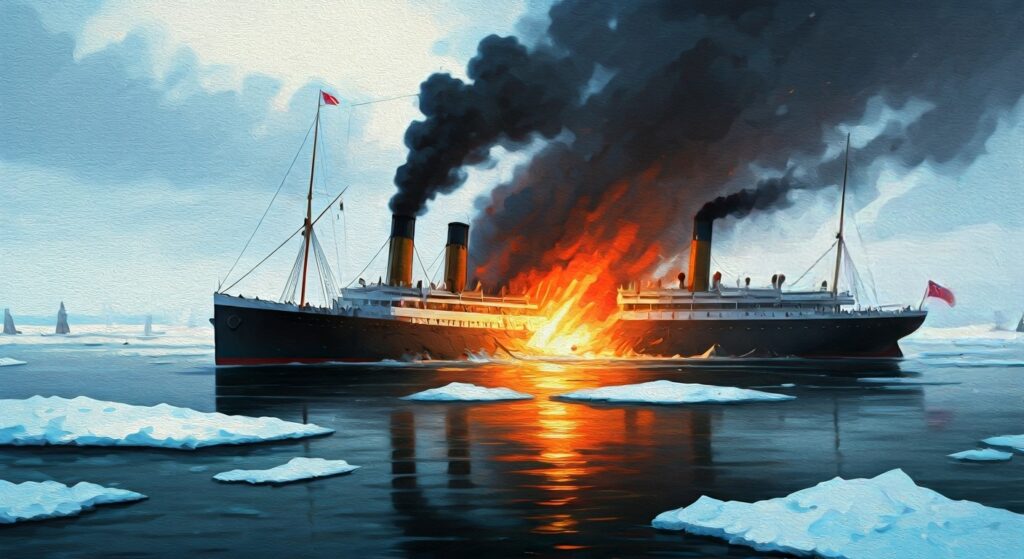
Realizing they were locked together, the Imo threw its engines into reverse to tear free. As the massive steel hulls ground apart, they generated a deadly shower of sparks. The sparks met the invisible cloud of benzol fumes.
In an instant, fire engulfed the Mont-Blanc.
The 20-Minute Countdown
The French crew knew exactly what was brewing beneath their boots. Facing certain annihilation, they immediately abandoned ship, rowing desperately for the Dartmouth shore while screaming warnings at the top of their lungs. But their frantic cries were in French, and the English-speaking onlookers on the shore couldn’t understand a word.
For twenty agonizing minutes, the Mont-Blanc became a burning ghost ship. It drifted aimlessly toward the Halifax shore, a towering pillar of black smoke acting like a morbid beacon. The spectacle drew crowds of curious civilians down to the waterfront. Hundreds more stood at their parlor windows in the working-class neighborhood of Richmond, pressing their faces against the glass to get a better look at the blazing spectacle.
They had no idea they were looking down the barrel of a loaded gun.
9:04 AM: Vaporization
At exactly 9:04 AM, the fire reached the high explosives.
The resulting cataclysm yielded an energy equivalent of roughly 2.9 kilotons of TNT. In a fraction of a millisecond, the Mont-Blanc ceased to exist. The sheer concussive force of the detonation was so violently powerful that it instantly displaced the water in the harbor, momentarily exposing the ocean floor to the open air. The ship was vaporized into deadly shrapnel, launching its half-ton anchor shaft over two miles into the sky.
Seconds later, the displaced water violently rushed back into the void, creating a 60-foot tsunami that surged over the shores. The massive wave entirely wiped out the Mi’kmaq Indigenous settlement of Turtle Grove, drowning hundreds in its path.
The shockwave leveled the neighborhood of Richmond, obliterating homes, factories, and railways in the blink of an eye. Windows shattered up to 50 miles away. Approximately 2,000 people were killed instantly or died shortly after, and another 9,000 were injured. Because so many civilians had been watching the fire from their homes, the blast blew window glass directly into their faces. The sheer number of blinding injuries from that single morning directly led to the establishment of the Canadian National Institute for the Blind.
The Cruelest Tomorrow
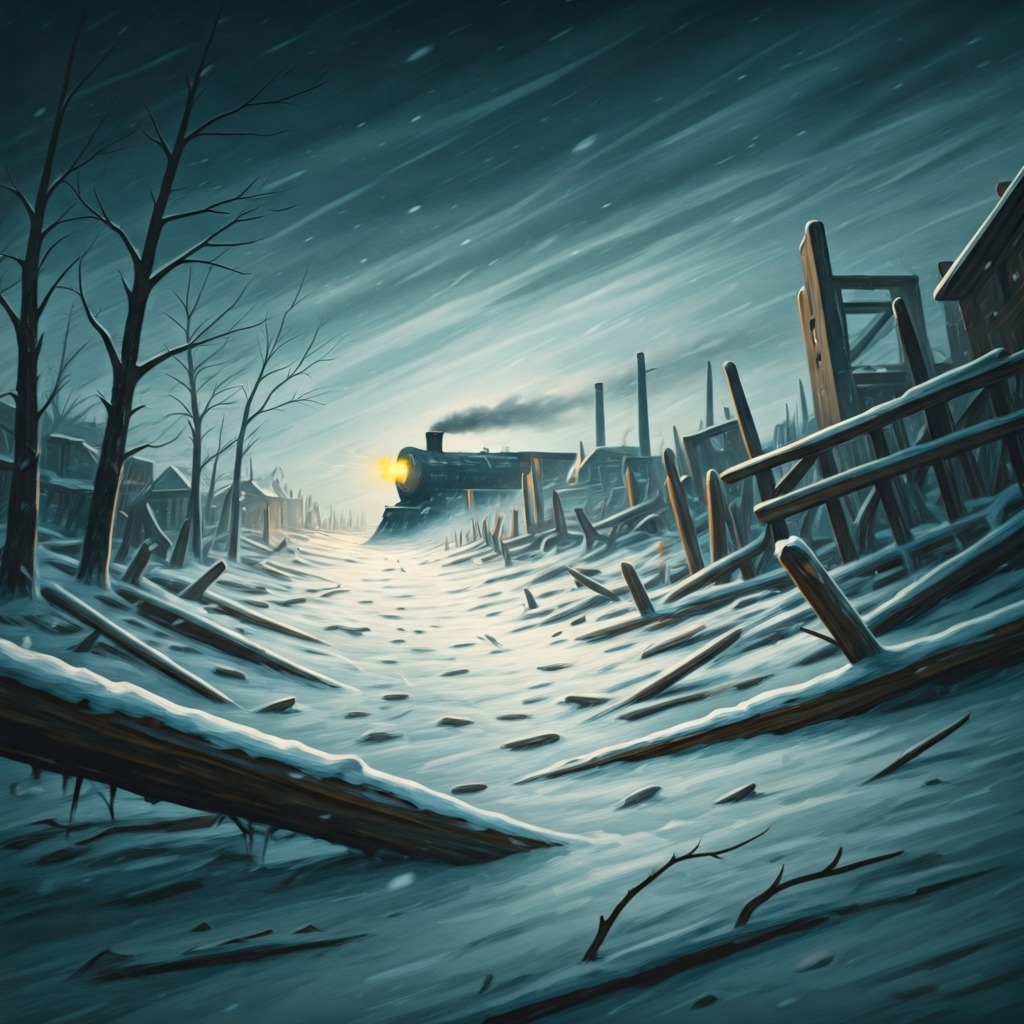
As if the sheer apocalyptic scale of the explosion wasn’t enough, nature decided to add a cruel twist. The very next day, a severe blizzard slammed into the ruined city, dumping 16 inches of snow and plunging temperatures well below freezing. Survivors trapped in the rubble froze to death before rescuers could reach them.
But from the ashes of this nightmare came an incredible wave of humanity. Relief trains rushed in from across Canada and the northeastern United States. The response from Boston was particularly monumental; within hours, they had organized trains packed with medical personnel, supplies, and funding, racing through the blizzard to save lives. It’s a bond that survives to this day—every single year, Nova Scotia sends a giant Christmas tree to Boston as an enduring token of gratitude.
The Halifax Explosion remained the grim benchmark for explosive force for decades. When the Manhattan Project was born, scientists like J. Robert Oppenheimer specifically studied the Halifax blast to estimate the potential destructive radius and horrific effects of the atomic bomb.
It remains a sobering reminder of the terrifying power humanity can accidentally unleash, all starting from a low-speed scrape in a crowded harbor.