Pop culture has lied to you about Hattori Hanzo. In movies and video games, he is almost always depicted as a mystical, shadow-dwelling assassin or a legendary swordsmith forging katanas in a dusty tavern. The myth is undeniably cool. But the historical reality? It is a hundred times more terrifying.
If you were building a fantasy warfare roster for Japan’s bloody Sengoku period, the real Hattori Hanzo would be your first-round draft pick. He wasn’t a man who hid in the shadows. He was a frontline tank, a master of logistics, and the architect of a covert rescue mission that literally saved the future of Japan.
The Demon in Iron
To understand the man formally known as Hattori Masanari, you have to strip away the Hollywood ninja tropes. Born in 1542, Hanzo was a high-ranking samurai general who served Tokugawa Ieyasu, the future unifier of Japan.
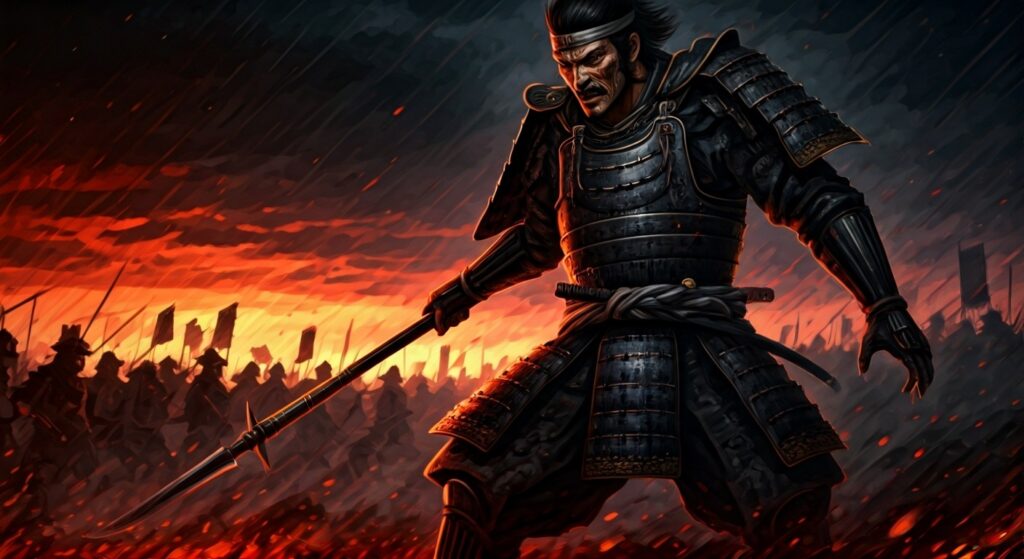
Hanzo didn’t wear lightweight pajamas; he fought on the front lines clad in heavy, impenetrable samurai armor and wielded a massive spear. He was such a devastating force in head-to-head combat during major bloodbaths like the Battle of Anegawa in 1570 that he earned a chilling moniker: Oni Hanzo—Demon Hanzo.
Yet, beneath the iron and the battlefield glory lay a dormant secret. Hanzo’s family hailed from the rugged, mountainous Iga Province, a region infamous for its fiercely independent warrior clans who specialized in espionage, guerrilla warfare, and covert operations. They were the original shinobi. For decades, this ancestral tie was merely an interesting footnote in Hanzo’s pedigree. But in the sweltering summer of 1582, that bloodline became the only thing standing between his lord and total annihilation.
The Ultimate Death Trap
In June 1582, Japan’s political landscape violently shattered. The ruthless warlord Oda Nobunaga was betrayed by his own general and forced to commit ritual suicide at Kyoto’s Honno-ji temple.
Hundreds of miles from the safety of his home province, Nobunaga’s most crucial ally, Tokugawa Ieyasu, was touring the merchant city of Sakai. He had brought no army with him—only a handful of loyal retainers. When the news of the coup broke, Ieyasu realized he was trapped deep behind enemy lines. He was surrounded by advancing rebel forces and opportunistic bandit armies eager to claim a high-profile head.
It was the ultimate logistical nightmare: no army, no supplies, no friendly territory, and an entire country suddenly hunting you. Believing his death was inescapable, Ieyasu prepared to do what any honorable samurai of his stature would do: draw his blade and end his own life.
The Impossible Escape
Demon Hanzo stepped in and stayed his lord’s hand.
Hanzo didn’t offer a sword; he offered a suicide mission. He proposed they make a desperate run through the treacherous, unforgiving mountains of Iga. For any outsider, stepping into Iga territory meant certain death. But Hanzo wasn’t an outsider.
In what would become legendary as the Shinkun Iga-goe (The Divine Lord’s Crossing of Iga), Hanzo traded his frontline spear for the cloak of a tactical mastermind. Tapping into his ancestral roots, he orchestrated a brilliant covert operation. He reached out to the shadowy Iga and Koka shinobi networks, uniting fractured guerrilla clans under the promise of future glory.
Instead of fighting impossible odds, Hanzo bought safe passage. He hired local fighters as pathfinders and bodyguards. The journey was a grueling, terrifying ordeal. They evaded rebel patrols, navigated sheer mountain cliffs in the dead of night, and violently crushed local uprisings that threatened to expose their VIP cargo. Against all odds, Hanzo’s masterclass in covert logistics worked. Ieyasu emerged from the mountains alive.
The Gatekeeper’s Legacy
That single, desperate trek changed the course of global history. Had Ieyasu died in those mountains, the Tokugawa Shogunate—which eventually unified Japan and ushered in over 250 years of peace—would never have existed.
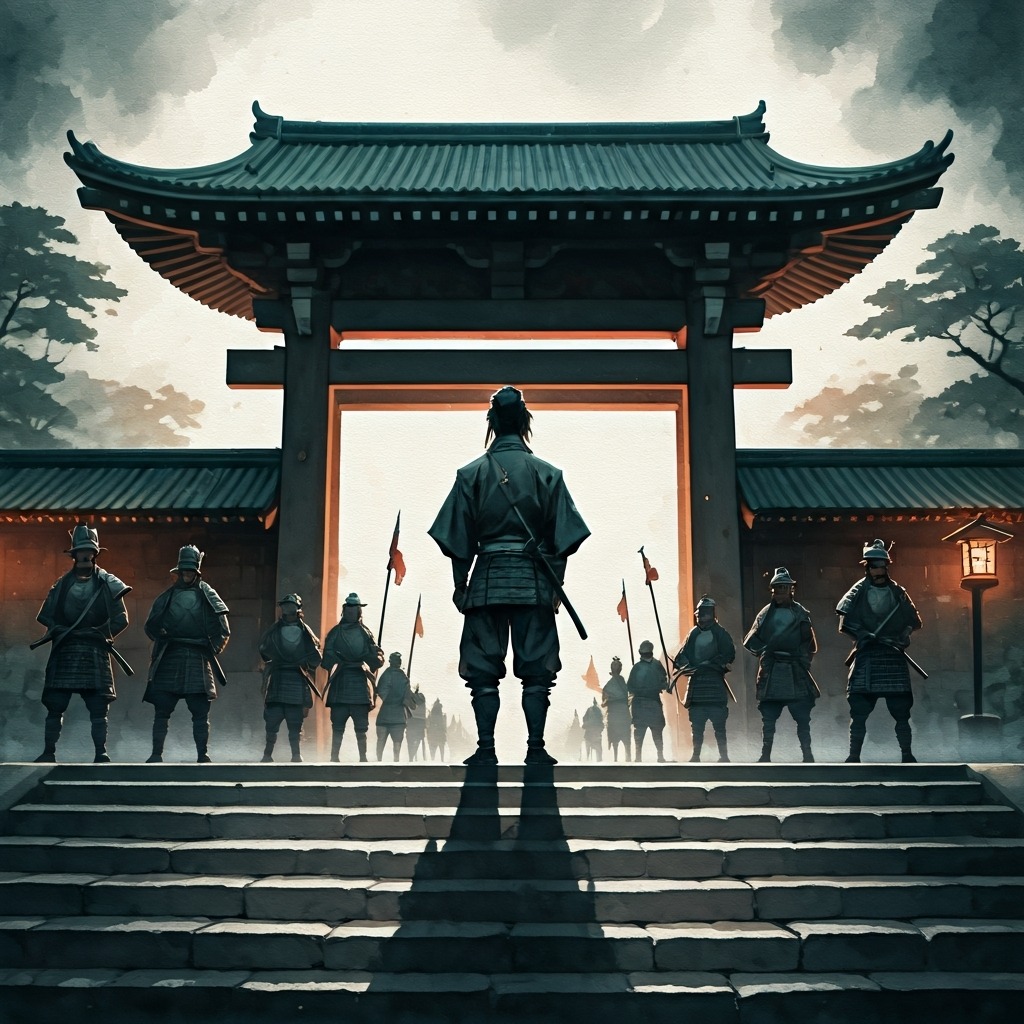
Ieyasu never forgot the man who brought him home. He rewarded Hanzo handsomely, granting him command over the very Iga warriors who had guided them through the dark. Hanzo integrated these fierce guerrillas into the Tokugawa military as an elite guard unit. When Ieyasu later established his new capital in Edo (modern-day Tokyo), he entrusted Hanzo and his men with guarding the castle’s crucial western gate.
Hanzo passed away in 1596 at the age of 54. He didn’t live to see the final unification of Japan, but his legacy is permanently stamped on its capital. Today, that western gate, the surrounding district, and a major Tokyo subway line still bear the name Hanzomon—Hanzo’s Gate.
So the next time you see Hattori Hanzo vanishing into a cloud of smoke on your screen, remember the truth. The real man didn’t need magic. He was a heavy-metal samurai who saved a dynasty with a spear, a shadow network, and the greatest escape route in Japanese history.