The ice did not merely freeze; it hunted.
In 1914, Sir Ernest Shackleton launched the Imperial Trans-Antarctic Expedition with a staggeringly ambitious goal: to become the first to cross the Antarctic continent on foot. He commanded a sturdy wooden vessel named the Endurance, a crew of twenty-eight hardened men, and a pack of sled dogs. But before they could even touch the continent, the frozen wasteland at the bottom of the world sprang its trap.
The Jaws of the Weddell Sea
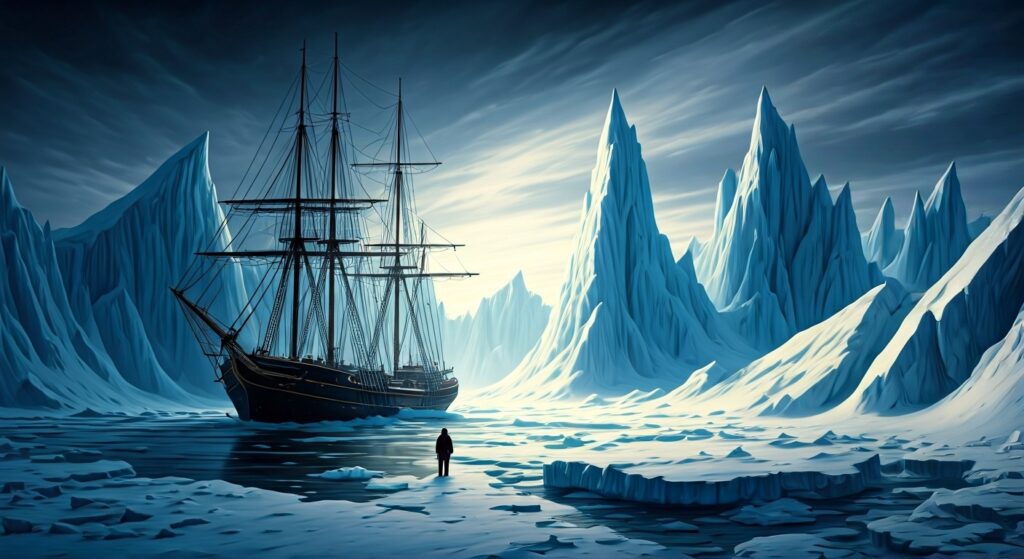
By January 1915, the Endurance had sailed deep into the Weddell Sea. Without warning, the dense pack ice closed in around the hull like a frozen vise. The ship was paralyzed.
For ten agonizing months, the crew could do nothing but wait in the eerie, groaning silence of the polar night. They were thousands of miles from civilization, drifting helplessly as the ice dictated their path. The psychological toll was unimaginable—twenty-eight men trapped in a frozen purgatory, listening to the shrieking of the ship’s timbers, waiting to see if the ice would release them or crush them.
Castaways on a Shattered World
In November 1915, the ice made its choice.
The immense, grinding pressure of the freezing ocean finally shattered the ship’s oak hull. Shackleton and his men had mere hours to abandon ship, hurling what meager supplies they could onto the floating ice floes before the Endurance slipped beneath the black, freezing water.
They were now castaways on a melting ice cube.
It was in this desperate moment that Shackleton’s genius as a leader crystallized. He instantly abandoned his grand dreams of exploration and pivoted to a singular, obsessive objective: keeping his men alive. He established “Ocean Camp” and later “Patience Camp” on the drifting floes. To stave off mutiny and despair, Shackleton enforced a strict routine, demanding that scientists and sailors share the most menial chores to ensure absolute equality. As their rations dwindled, they were forced into a grim diet of penguins, seals, and, eventually, their own beloved sled dogs.
Through it all, expedition photographer Frank Hurley managed to salvage his glass plate negatives from the sinking ship, capturing hauntingly beautiful images that would forever cement their nightmare into legend.
Escape to a Desolate Rock
By April 1916, the ice beneath their boots began to crack and splinter. Their frozen sanctuary was disintegrating into the sea.
The crew scrambled into three salvaged lifeboats and launched into the treacherous waters. For five days, they battled the freezing ocean, enduring sub-zero spray that turned to ice on their faces. When they finally dragged themselves onto the rocky, unforgiving shores of Elephant Island, it was the first time they had stood on solid ground in 497 days.
But their relief was a cruel illusion. Elephant Island was desolate, uninhabited, and entirely outside any shipping lanes. To stay was to wait for death. Shackleton knew he had to make a terrifying gamble.
Into the Drake Passage
Shackleton selected five men—including Captain Frank Worsley and the brilliant, insubordinate carpenter Harry McNeish—to take the largest lifeboat and go for help.
McNeish worked a miracle on the desolate beach. He took a 22.5-foot boat named the James Caird, raised its sides, and built a makeshift deck out of scavenged sledge runners and canvas to seal it against the ocean. Their destination was the whaling stations of South Georgia Island. Between them lay 800 miles of the Drake Passage, universally feared as the most violent stretch of ocean on the planet.
For sixteen days, these six men endured hurricane-force winds and rogue waves that threatened to swallow them whole. Worsley miraculously navigated by catching fleeting glimpses of the sun while being thrown violently across the swells. Against every law of probability, they struck the coast of South Georgia Island.
The Ghost Trek
But the Antarctic wasn’t done playing with them. Hurricane winds had forced them to land on the uninhabited southern coast. The whaling stations were on the north side, and between them lay an uncharted, glaciated mountain range that no human had ever crossed.
Leaving three exhausted men with the boat, Shackleton, Worsley, and Tom Crean pushed screws from the lifeboat into the soles of their rotting boots for traction. They then embarked on a 32-mile trek across treacherous, icy peaks, marching for 36 non-stop hours.
When they finally stumbled into the Stromness whaling station, the station manager recoiled. The men before him were unrecognizable—filthy, emaciated ghosts returning from the dead.
“They Are All Safe”
Shackleton refused to rest. He immediately began organizing rescue efforts for the twenty-two men still stranded on Elephant Island.
Back on that desolate rock, Shackleton’s second-in-command, Frank Wild, was keeping hope alive. Every single morning, he would look at the starving, freezing men and say, “Lash up and stow, boys, the boss is coming today.”
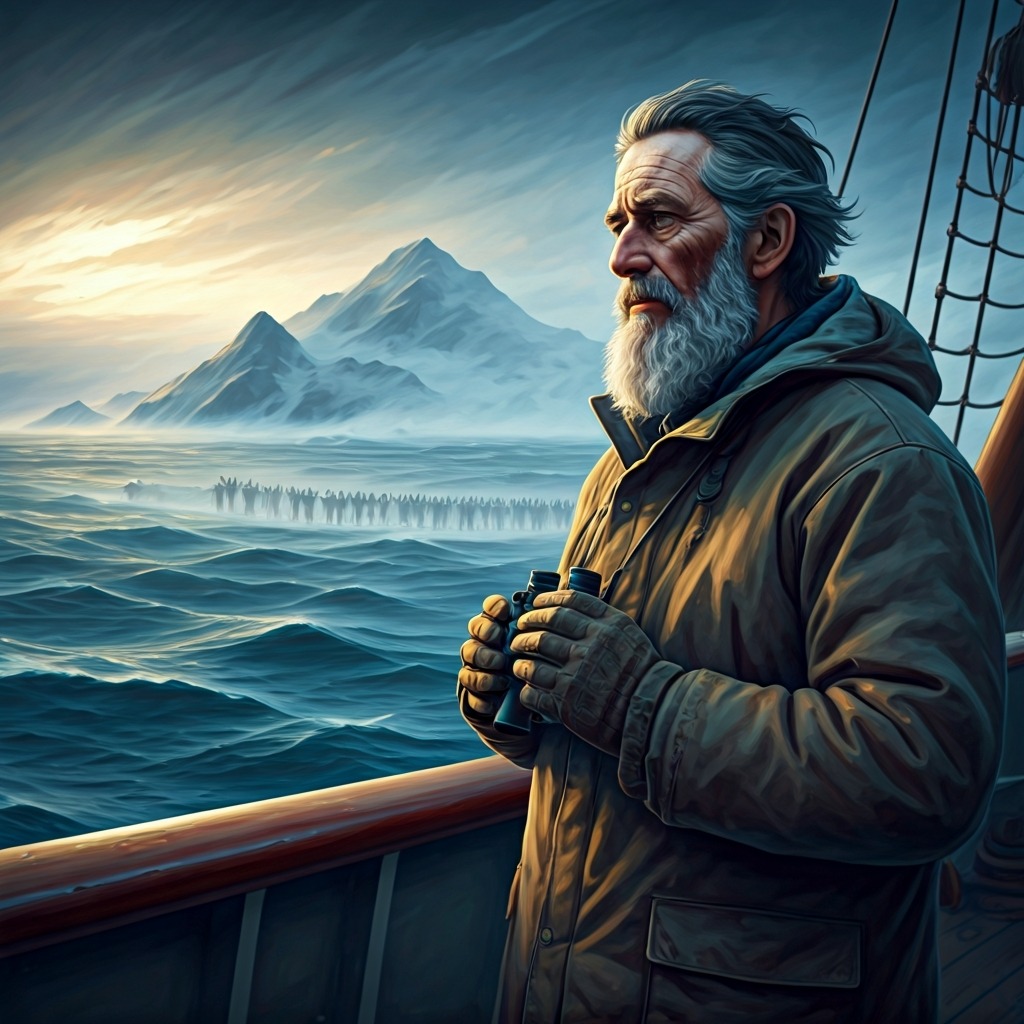
After three failed rescue attempts thwarted by relentless pack ice, Shackleton finally broke through on the Chilean tug Yelcho on August 30, 1916. As the tug approached the island, Shackleton peered through his binoculars, frantically counting the tiny figures waving from the beach.
He turned to Worsley, his voice thick with emotion, and spoke the words that would define his legacy: “They are all there, Skipper. They are all safe.”
Miraculously, every single one of the twenty-eight men who sailed into the ice survived the nearly two-year ordeal. The Endurance expedition failed in its original mission, but it succeeded in something far greater: it became history’s ultimate masterclass in crisis leadership, and a timeless testament to the sheer, stubborn will of the human spirit.