April 18, 1955. The rhythmic hum of Princeton Hospital faded into a heavy, historic silence. Albert Einstein, the greatest mind of the 20th century, had just flatlined from a ruptured abdominal aortic aneurysm.
Einstein’s final wishes were absolute and crystal clear: he demanded to be cremated and his ashes scattered in secret. He was terrified of his resting place becoming a shrine for idolaters, and he wanted no part in posthumous worship.
But Dr. Thomas Stoltz Harvey, the pathologist on call that fateful night, had a completely different script in mind. Standing over the lifeless body of the legendary physicist, Harvey made a split-second decision that would trigger one of the most bizarre, macabre, and ethically disastrous sagas in modern scientific history.
The Midnight Harvest
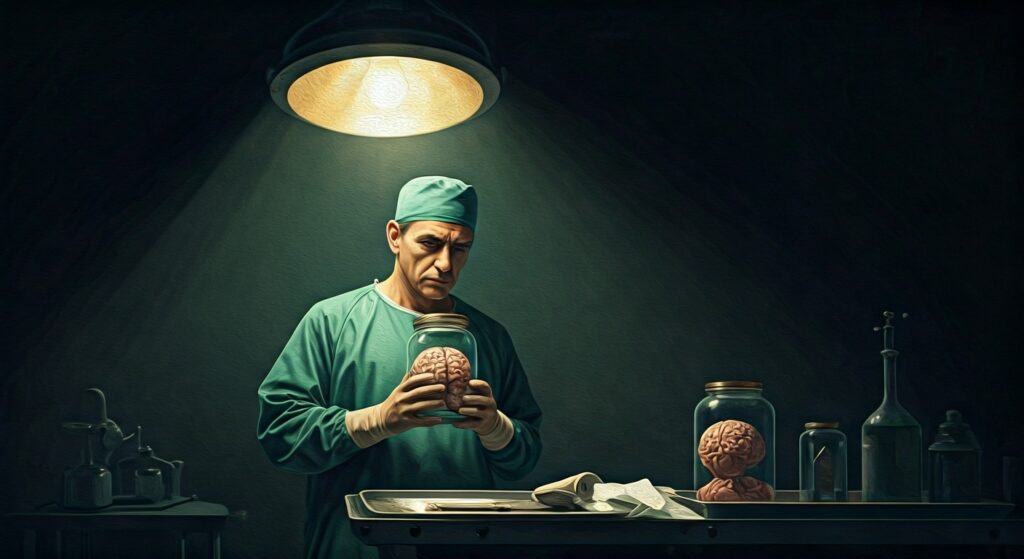
Under the cold, sterile lights of the autopsy room, Harvey did the unthinkable. Without a shred of permission from Einstein or his grieving family, he opened the physicist’s skull and removed his brain, weighing the stolen organ at exactly 1,230 grams. As if this profound violation wasn’t enough, Harvey then removed Einstein’s eyes, later handing them over to the physicist’s ophthalmologist as a morbid keepsake.
When the media inevitably caught wind of the theft shortly after, Einstein’s son, Hans Albert, was understandably furious. Harvey, scrambling to save his career and his illicit prize, managed to corner the grieving son and secure a reluctant, retroactive blessing. The strict condition? The brain was to be used solely for scientific research, and any findings had to be published in reputable medical journals.
Despite this forced agreement, Princeton Hospital was appalled. When Harvey flat-out refused to surrender the stolen organ to his employers, they fired him on the spot. But the damage was done. Harvey walked out the door, taking the genius of the century with him.
The Cider Box Secret
Acting as a rogue scientist, Harvey meticulously photographed the brain from every conceivable angle. He then sectioned it into 240 blocks, embedding them in a plastic-like substance called celloidin, and stored these chunks of genius in two glass jars filled with formalin.
Where does one keep the most famous brain in human history? For Harvey, the answer was a cider box.
He stashed the jars under a beer cooler in his office. Later, as his life unraveled, the brain was relegated to the damp shadows of his basement. For decades, the organ vanished from the public eye. Harvey drifted aimlessly around the Midwest, his marriage collapsing and his medical license eventually revoked. He became a ghost of the medical community, occasionally slicing off small slivers of the brain and mailing them to interested neuroscientists like morbid postcards.
Slicing Through the Genius
Did this horrific violation of a dying man’s wishes actually yield any scientific breakthroughs? The answer is a complicated, highly debated “sort of.”
In 1985, Dr. Marian Diamond published the first study on the stolen tissue. She discovered a higher ratio of glial cells to neurons in the inferior parietal lobe—an area of the brain heavily associated with mathematical and spatial reasoning.
Fourteen years later, researcher Sandra Witelson found that Einstein’s inferior parietal lobe was 15 percent wider than average and lacked a typical parietal operculum. This anatomical quirk potentially allowed for better communication between neurons. Was this the biological blueprint of genius? The scientific community remains divided, with many arguing that studying a single brain decades after death offers more speculation than hard science.
The Tupperware Expedition
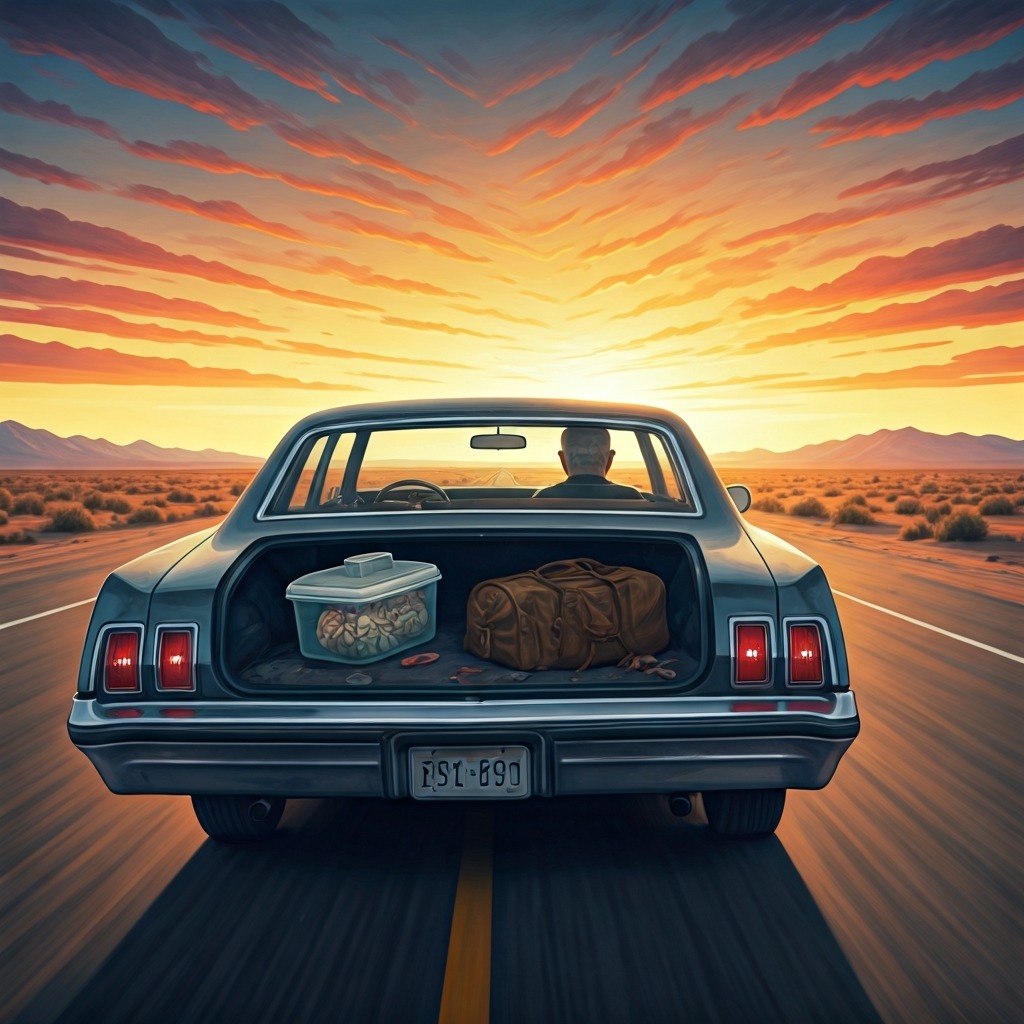
By 1997, the story morphed from a dark medical thriller into a surreal Hollywood fever dream. An elderly Harvey, desperate to tie up the loose ends of his bizarre life, embarked on a cross-country road trip. Accompanied by freelance writer Michael Paterniti, Harvey climbed into a Buick Skylark and drove from New Jersey to California to meet Einstein’s granddaughter, Evelyn.
Their cargo? The remaining pieces of Albert Einstein’s brain, sloshing around in a Tupperware container stuffed inside a duffel bag in the trunk of the Buick.
Finally, in 1998, the rogue pathologist surrendered. Harvey returned the remaining portions of the brain to the pathology department at Princeton Hospital—the very place he had stolen it from 43 years earlier. Harvey passed away in 2007, leaving behind a legacy that is equal parts scientific quest, pop-culture oddity, and a terrifying lack of boundaries.
It is a chilling reminder that sometimes the most riveting history isn’t made by kings or politicians. Sometimes, it’s made by an opportunistic physician in the dead of night, armed with a scalpel and a cider box.